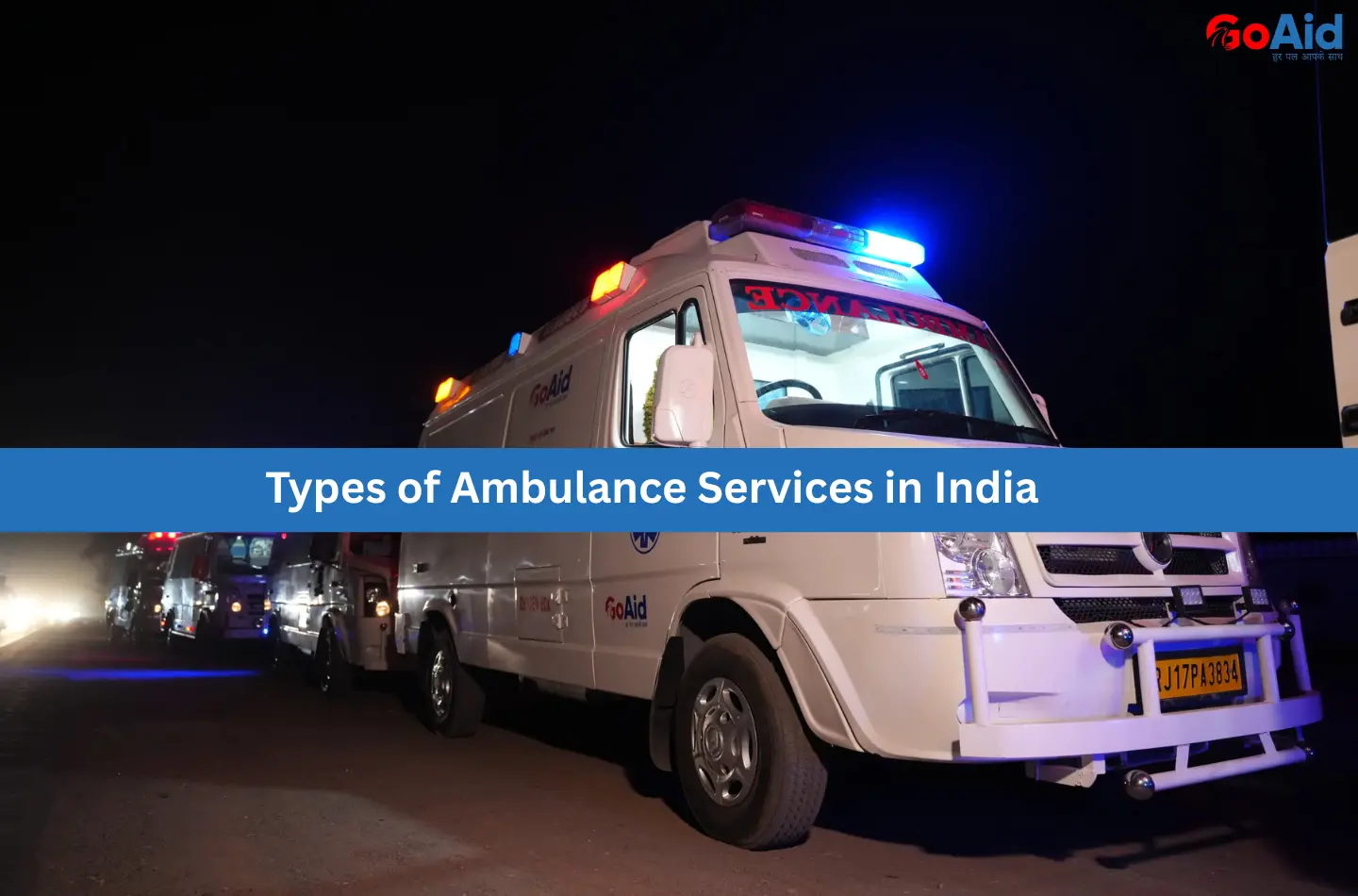

In India, the types of ambulance services are essential during medical emergencies, as every situation demands a different level of care. From basic patient transport to advanced critical care, ambulances are designed to handle varied medical needs.
It is crucial to choose the right service because it ensures timely treatment, patient stability, and better outcomes. With trusted providers like GoAid Ambulance Service, people now have access to multiple ambulance options through a reliable and fast ambulance service available across major Indian cities.
Different Types of Ambulance Services in India
India offers multiple ambulance categories to match different medical emergencies. Each ambulance type is equipped and staffed according to the patient’s condition, ensuring safe and appropriate emergency transport.
- Basic Life Support (BLS) Ambulance: Designed for non-critical patients, the BLS ambulance service supports basic medical needs like oxygen supply, monitoring vital signs, and safe hospital transfers without advanced life-saving interventions.
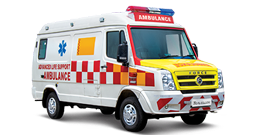
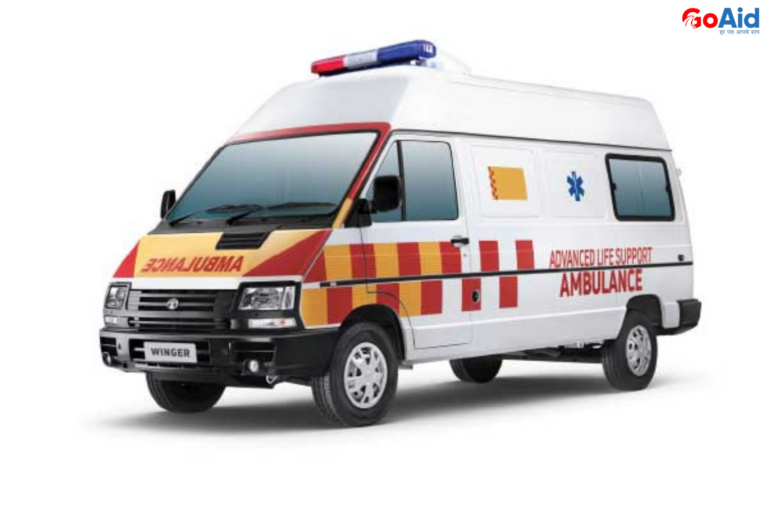
- Advanced Life Support (ALS) Ambulance: An Advanced Life Support ambulance is equipped for serious medical emergencies, providing cardiac monitoring, advanced airway management, and life-saving medications during patient transport.
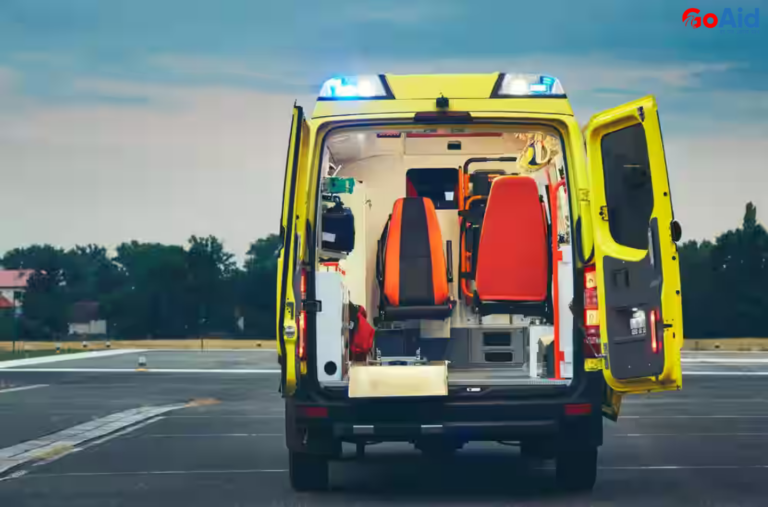
- ICU Ambulance: An ICU ambulance service functions like a moving intensive care unit, offering ventilator support, continuous monitoring, and critical care for patients who cannot be safely shifted in standard ambulances.
- Air Ambulance: An air ambulance service in India is used for long-distance or time-critical transfers, ensuring rapid medical evacuation with specialized doctors and advanced equipment onboard.
- Neonatal & Pediatric Ambulance: These ambulances are specially designed for newborns and children, offering temperature control, child-sized equipment, and trained staff to manage delicate pediatric emergencies.
- Mortuary & Freezer Box Ambulance: Used for dignified transportation of deceased individuals, these ambulances maintain hygiene, temperature control, and legal compliance during long-distance or intercity transfers.
Why Choosing the Right Type of Ambulance Matters in Emergencies?
The correct ambulance during an emergency can directly impact patient survival and recovery. Not every medical situation requires advanced care, but choosing a lower-equipped ambulance for a critical case can be dangerous. Understanding the Types of Ambulance Services in India helps families avoid delays, inadequate treatment, and unnecessary risks.
The right ambulance ensures proper equipment, trained paramedics, and continuous care during transit. Providers like GoAid Ambulance Service simplify this decision by offering multiple ambulance options under one platform, ensuring patients receive the exact level of care needed during emergencies.
What Is a Basic Life Support (BLS) Ambulance?
A Basic Life Support ambulance is designed for patients who require medical supervision but are not in a life-threatening condition. The BLS ambulance service focuses on safe patient transport, basic monitoring, and essential first aid during transit. It is commonly used for hospital transfers, minor injuries, post-surgery movement, or stable medical conditions.
A BLS ambulance ensures patient comfort while maintaining vital stability. Services like GoAid BLS Ambulance provide reliable and fast ambulance service support, making it suitable for non-critical yet medically necessary transportation needs.
When Should You Use a BLS Ambulance?
A BLS ambulance is ideal for medical situations that require professional supervision but not advanced life-saving interventions. It ensures safe, comfortable, and timely patient transport.
- Non-Emergency Hospital Transfers: Suitable for moving stable patients between hospitals, diagnostic centers, or rehabilitation facilities.
- Minor Injuries or Medical Conditions: Used for patients with fractures, mild infections, or weakness that do not require intensive monitoring.
- Post-Surgery Patient Transport: Ideal for patients discharged after minor procedures who need supervised travel home.
- Elderly Patient Transfers: Provides comfort and safety for seniors needing medical support without critical care.
- Scheduled Medical Appointments: Helpful for patients who cannot travel independently but require basic medical assistance.
- Observation-Based Transfers: Used when doctors recommend monitoring during transit without advanced interventions.
What Is an Advanced Life Support (ALS) Ambulance?
An Advanced Life Support ambulance is designed for critical medical emergencies requiring immediate, advanced medical care during transport. The ALS ambulance service is equipped with life-saving equipment and staffed by trained paramedics or doctors capable of managing cardiac emergencies, severe trauma, or respiratory distress.
These ambulances provide continuous monitoring, medication administration, and advanced airway support. Services like GoAid ALS Ambulance bridge the gap between emergency scenes and hospitals by delivering ICU-level care on the move, making them essential for high-risk and time-sensitive medical situations.
Situations Where an ALS Ambulance Is Required
An ALS ambulance is crucial in emergencies where advanced medical intervention is needed before hospital arrival. These situations demand skilled staff, rapid response, and continuous patient monitoring.
- Heart Attack or Cardiac Arrest: An Advanced Life Support ambulance provides immediate cardiac care, monitoring, and defibrillation during life-threatening heart emergencies.
- Severe Trauma or Road Accidents: Used when patients suffer serious injuries requiring advanced airway management and continuous monitoring during transport.
- Breathing Failure or Severe Asthma Attacks: Provides ventilator and oxygen support to stabilize patients experiencing acute respiratory distress.
- Stroke and Neurological Emergencies: Ensures timely monitoring and intervention, reducing the risk of long-term complications during patient transfer.
- Unconscious or Critical Patients: Used when patients require constant observation, medication, and airway support en route to the hospital.
- High-Risk Inter-Hospital Transfers: Ideal for shifting critically ill patients between medical facilities while maintaining advanced life support.
What Is an ICU Ambulance?
An ICU ambulance service is a fully equipped mobile intensive care unit designed for critically ill patients who need continuous life support during transport. Often referred to as an ICU ventilator ambulance, it carries advanced monitoring systems, ventilators, infusion pumps, and emergency medications.
These ambulances are staffed by experienced doctors, nurses, and paramedics trained in critical care management. ICU ambulances are essential for transferring patients with unstable vital signs, severe trauma, or organ failure. With providers like GoAid Ambulance Service, ICU ambulances ensure hospital-level care is maintained throughout the journey, offering a safe and reliable emergency ambulance service in India.
When Is an ICU Ambulance Necessary?
An ICU ambulance is required when a patient’s condition is highly unstable and demands continuous medical supervision, advanced equipment, and life-support systems throughout the journey to the hospital.
- Critically Ill Patients: Patients with unstable vital signs need an ICU ambulance service to receive uninterrupted monitoring, ventilator support, and emergency intervention during transport.
- Ventilator-Dependent Patients: An ICU ventilator ambulance is essential for patients who cannot breathe independently and require controlled respiratory support throughout the transfer.
- Severe Trauma or Multi-Organ Failure: Used when injuries or organ failure demand intensive care-level treatment while moving between hospitals or emergency locations.
- Post-Surgical Critical Transfers: Required for patients recovering from major surgeries who need continuous monitoring and specialized care during transit.
- High-Risk Intercity Transfers: Ensures safe movement of critically ill patients across cities with hospital-grade medical support onboard.
- Neurological or Coma Patients: Provides stable monitoring and emergency care for patients with brain injuries, strokes, or unconscious states.
What Is an Air Ambulance Service in India?
An air ambulance service in India provides rapid medical transportation for critically ill patients over long distances or difficult terrains. These ambulances use aircraft or helicopters equipped with advanced medical equipment, allowing hospital-level care during flight. Air ambulances are staffed with experienced doctors and paramedics trained in emergency and critical care.
They are commonly used for time-sensitive cases, intercity transfers, and remote-area evacuations. With Emergency ambulance services in India evolving, providers like GoAid Air Ambulance ensure faster response, reduced travel time, and safe patient transfers when road transport is not feasible.
Types of Air Ambulances: Helicopter vs Fixed-Wing
Air ambulance services in India operate using two main aircraft types, which are helicopters and fixed-wing planes.
Helicopter ambulances are ideal for short distances, accident sites, or remote locations where runways are unavailable. They offer quick takeoff and landing for urgent evacuations.
Fixed-wing air ambulances are used for long-distance and intercity transfers, providing greater speed, stability, and extended medical facilities onboard. These aircraft are equipped to handle critical patients requiring continuous care. Choosing the right air ambulance depends on distance, urgency, patient condition, and destination accessibility.
When Is Air Ambulance the Best Choice?
An air ambulance becomes the best option when time, distance, or terrain makes road transport unsafe or too slow for critical medical situations.
- Life-Threatening Emergencies: Air ambulance services are crucial when every minute matters, ensuring rapid transfer for patients with severe trauma or cardiac conditions.
- Long-Distance Intercity Transfers: Ideal for shifting patients across states or cities where road ambulance travel would cause dangerous delays.
- Remote or Difficult Locations: Used to evacuate patients from hilly areas, islands, or regions with limited road connectivity.
- Critical Care Transfers: Supports patients requiring ICU-level monitoring and ventilation during fast aerial transport.
- International Medical Transfers: Essential for patients needing specialized treatment abroad or medical repatriation to India.
- Time-Sensitive Surgeries: Ensures patients reach advanced medical facilities quickly for urgent surgical interventions.
Factors to Consider Before Booking an Ambulance Service
The right ambulance is crucial for patient safety and timely medical care. Evaluating key factors helps ensure the ambulance matches the medical condition and provides reliable emergency support.
- Patient’s Medical Condition: Assess whether the patient requires basic care or advanced support, as different types of ambulance services in India cater to varying levels of medical urgency.
- Type of Ambulance Required: Select between BLS ambulance service, ALS ambulance service, or ICU ambulance service based on the severity of the emergency and treatment needs.
- Response Time and Availability: A fast ambulance service ensures quicker medical intervention, especially during critical emergencies where every minute impacts patient outcomes.
- Medical Equipment Onboard: Ensure the ambulance is equipped with necessary devices like oxygen, monitors, or ventilators as per the patient’s condition.
- Trained Medical Staff: Experienced paramedics and doctors play a vital role in providing safe care during emergency ambulance services in India.
- Distance and Route Conditions: Long-distance or intercity transfers may require specialized ambulances with continuous monitoring and comfort support.
- Cost Transparency: Clear and upfront pricing helps families make informed decisions during stressful emergency situations.
Types of Ambulance Services Provided by GoAid
GoAid Ambulance Service provides a complete range of emergency and non-emergency ambulance solutions, ensuring fast ambulance service, medical safety, and the best ambulance service experience across major Indian cities.
- Basic Life Support (BLS) Ambulance: The GoAid BLS Ambulance is ideal for stable patients who need basic medical monitoring, oxygen support, and safe transportation during non-critical situations.
- Advanced Life Support (ALS) Ambulance: The GoAid ALS Ambulance delivers advanced cardiac care, emergency medications, and continuous monitoring for patients facing serious and life-threatening medical emergencies.
- ICU Ambulance Service: GoAid’s ICU ambulance service works as a mobile intensive care unit, providing advanced life support, continuous monitoring, and critical care during patient transfer.
- Air Ambulance Service: The GoAid Air Ambulance enables rapid long-distance and intercity transfers, offering advanced medical care during flight for critically ill patients when time is extremely crucial.
- Neonatal Ambulance Service: Specially designed for newborn emergencies, these ambulances provide temperature control, neonatal equipment, and trained medical professionals for safe infant transport.
- Mortuary Van Ambulance: Used for dignified transportation of deceased individuals, maintaining hygiene and respectful handling during local or long-distance transfers.
- Dead Body Freezer Box Ambulance: Provides temperature-controlled preservation for deceased individuals during extended transport or legal procedures.
- Event & Hospital Transfer Ambulance: Ideal for medical coverage at public events and planned hospital transfers, ensuring readiness and professional care at all times.
How GoAid Provides All Types of Ambulance Services Under One Platform
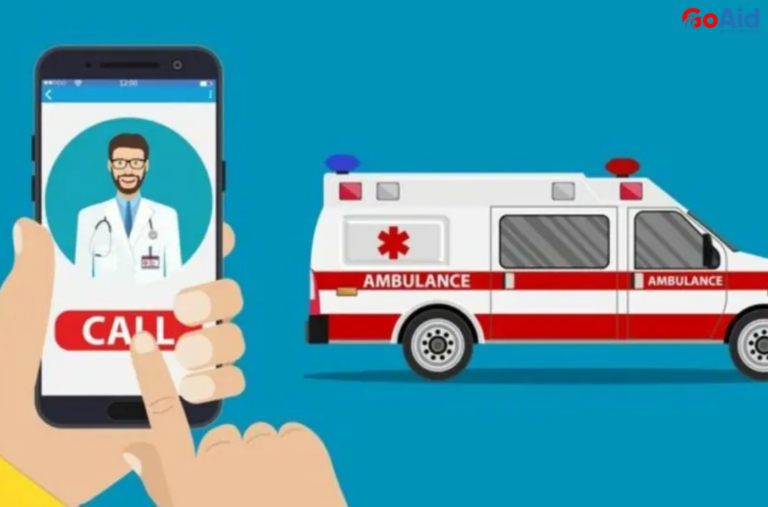
GoAid Ambulance Service simplifies emergency care by offering multiple ambulance options on a single platform, ensuring patients receive the right medical support quickly and efficiently.
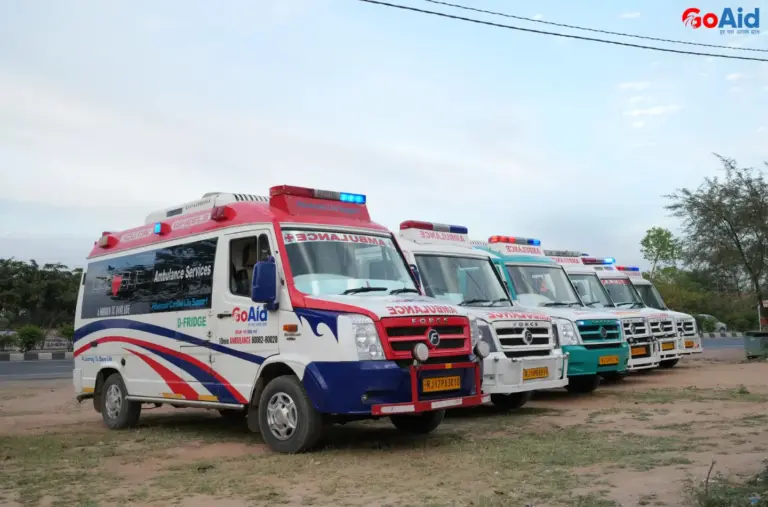
- Wide Range of Ambulance Types: GoAid offers BLS, ALS, ICU, and air ambulance services in India, catering to every medical emergency under one reliable system.
- 24 Hour Ambulance Service: Round-the-clock availability ensures emergency support during the day or night without delays.
- Fast Ambulance Service Network: A strategically placed fleet allows GoAid to deliver rapid response across major Indian cities.
- Advanced Booking Technology: Smart systems match patient needs with the nearest suitable ambulance in real time.
- Experienced Medical Teams: Trained paramedics and doctors ensure professional care throughout the journey.
- Transparent and Approved Pricing: Government-approved rates help maintain affordability and trust.
- Nationwide Emergency Coverage: GoAid connects patients to emergency ambulance services in India across multiple cities and routes.
Conclusion to the types of Ambulance Services in India
In India, Types of Ambulance Services helps people respond faster and choose appropriate medical support during emergencies. Each ambulance type serves a specific purpose, from basic care to critical life support. With GoAid Ambulance Service, patients get access to the best ambulance service through one platform, ensuring timely response, medical safety, and peace of mind.
FAQs About Ambulance Services in India
Question-1: What are the main types of ambulance services in India?
Answer: India offers BLS, ALS, ICU, neonatal, pediatric, mortuary, and air ambulance services, each designed for different levels of medical emergencies.
Question 2: When should I use a BLS ambulance service?
Answer: A BLS ambulance service is ideal for stable patients who need basic monitoring and safe transport without advanced life-saving treatment.
Question 3: What situations require an ALS ambulance service?
Answer: An ALS ambulance service is required for serious emergencies such as heart attacks, severe trauma, or breathing difficulties needing advanced care.
Question 4: Who needs an ICU ambulance service?
Answer: An ICU ambulance service is necessary for critically ill patients who require ventilator support and continuous intensive care during transport.
Question-5: When is air ambulance service in India recommended?
Answer: An air ambulance service in India is recommended for long-distance, remote-area, or time-critical transfers where road travel may be unsafe or slow.
Question 6: Why choose GoAid Ambulance Service during emergencies?
Answer: GoAid Ambulance Service offers a 24-hour ambulance service, fast response, multiple ambulance options, and reliable medical support across Indian cities.