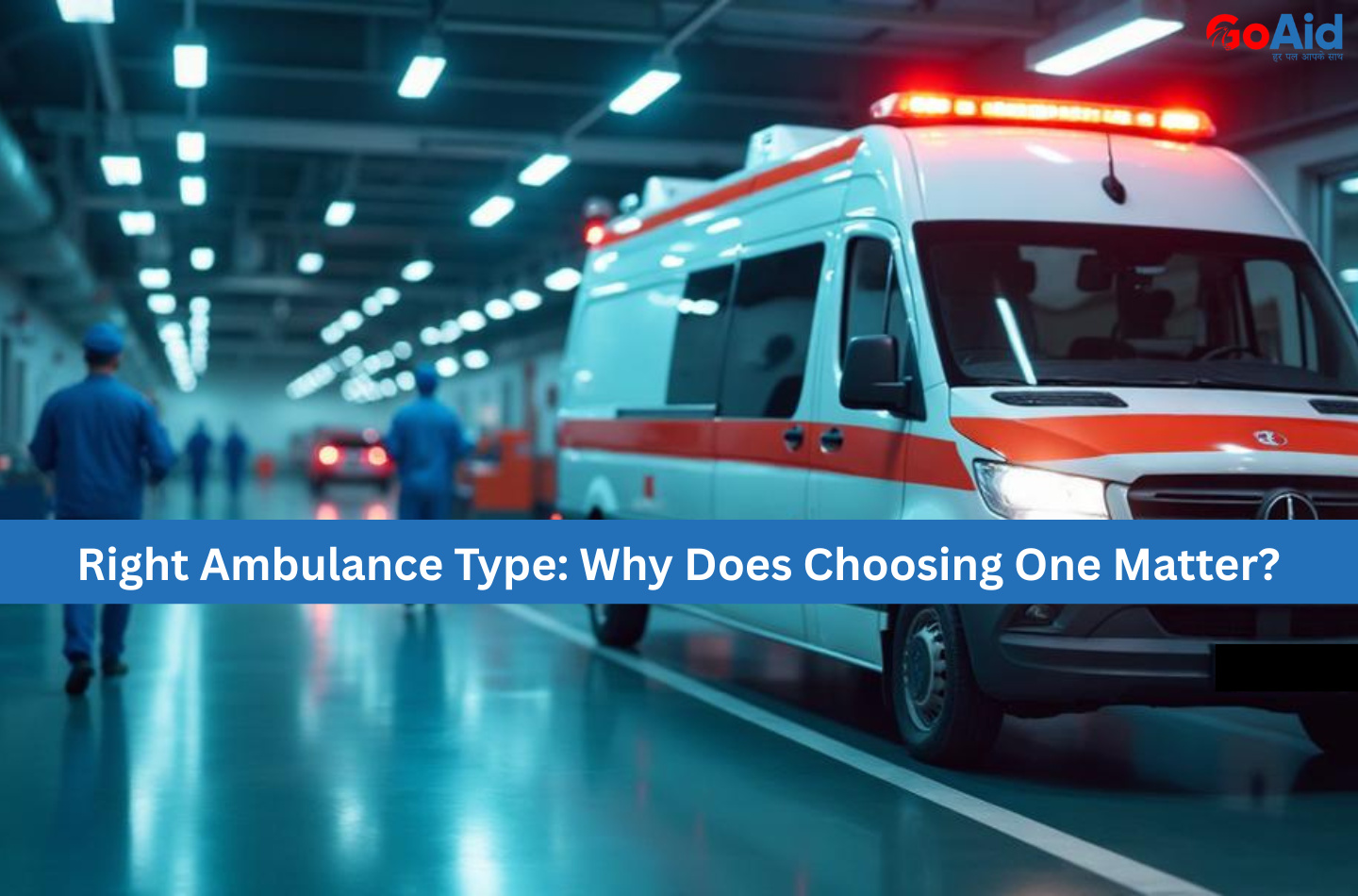

It is crucial to understand the right ambulance type because every medical emergency requires a different level of care and equipment. Choosing an incorrect ambulance service can delay treatment, increase health risks, and compromise patient safety during transport.
In this guide, we will explain to you:
- How to choose the right ambulance type based on patient condition
- List of required medical equipment
- General response time
- Overall, emergency needs for safe and effective transfer.
Understanding Different Types of Ambulances
Different medical situations require different levels of care during transport. Understanding each ambulance type helps you select the right ambulance type for safe and effective patient transfer.
Normal / BLS Ambulance
A BLS ambulance is designed for stable patients who need basic monitoring and safe hospital transportation without advanced life support systems.
Key Features:
- Basic life support equipment
- Oxygen supply
- Stretcher and first-aid kit
- Blood pressure monitor
- Trained EMT staff
When to Choose:
- Minor injuries
- Stable patients
- Hospital discharge
- Routine transfers
- Non-critical cases
- Short-distance travel
Oxygen Ambulance
An oxygen ambulance is suitable for patients experiencing breathing difficulties but not requiring full ICU-level intensive care monitoring.
Key Features:
- Oxygen cylinders with masks
- Pulse oximeter monitoring
- Basic cardiac monitoring
- Trained paramedic
- Emergency medication kit
When to Choose:
- Respiratory distress
- Asthma attacks
- Elderly breathing issues
- COVID-related symptoms
- Mild lung infections
- Oxygen-dependent patients
ICU / Ventilator Ambulance
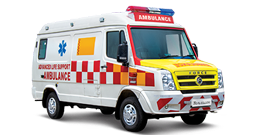
An ICU or ventilator ambulance provides advanced life support ambulance care for critical patient transfer requiring constant monitoring and intensive medical supervision.
Key Features:
- Ventilator support system
- Advanced cardiac monitor
- Infusion pumps
- Defibrillator
- Critical care team
When to Choose:
- Heart attack cases
- Stroke emergencies
- Severe trauma
- Ventilator-dependent patients
- Organ failure cases
- Inter-hospital ICU transfer
Air Ambulance
An air ambulance is used for long-distance emergency transfers where time is critical and road transport is not suitable.
Key Features:
- Aircraft with a medical setup
- ICU-level equipment
- Critical care doctors
- Rapid long-distance travel
- Emergency evacuation support
When to Choose:
- Remote locations
- Organ transplant transfer
- Inter-state emergencies
- Time-sensitive critical cases
- Mountain or rural areas
- International transfer needs
Train Ambulance
A train ambulance service is a cost-effective solution for long-distance patient transfers across cities while maintaining medical supervision.
Key Features:
- Modified train cabin ICU setup
- Continuous oxygen support
- Medical staff onboard
- Monitoring equipment
- Long-distance stability care
When to Choose:
- Stable ICU patients
- Planned transfers
- Budget-conscious families
- Long-distance travel
- Inter-state patient movement
- Non-urgent critical care
The right ambulance type ensures proper medical care, patient safety, and timely treatment during emergency or planned transfers.
Factors to Consider Before Booking an Ambulance
Before booking, assessing the patient’s condition and medical requirements is essential. The right ambulance type depends on equipment, response time, and the level of medical supervision needed.
- Patient’s Medical Condition: Evaluate whether the patient is stable, oxygen-dependent, or critical to determine if BLS ambulance or ICU ambulance service is required.
- Level of Medical Equipment Needed: Check if advanced life support ambulance equipment like ventilator, cardiac monitor, or infusion pumps, is necessary during transport.
- Distance to Be Covered: Short city transfers may need basic support, while long-distance inter-hospital patient transfer may require ICU, train, or air ambulance.
- Response Time Availability: Ensure the service offers 24/7 ambulance service with quick dispatch to prevent treatment delays during emergencies.
- Trained Medical Staff: Confirm availability of paramedics or critical care professionals, depending on the patient’s severity and monitoring requirements.
- Transparent Pricing: Understand the ambulance type for medical need and associated charges clearly before confirming emergency ambulance booking.
All these factors help families choose the right ambulance type and ensure safe, timely, and medically appropriate patient transport.
Common Mistakes While Selecting an Ambulance
In emergencies, panic often leads to rushed decisions. Selecting the wrong ambulance type can increase risks and delay proper treatment.
- Choosing the cheapest option without checking the equipment
- Ignoring the patient’s medical severity
- Not asking about ventilator availability
- Calling unverified local transport services
- Delaying booking due to confusion
- Not confirming trained medical staff presence
- Failing to inform the receiving hospital
Avoiding these mistakes ensures proper emergency ambulance booking and improves patient safety during critical or routine transfers.
How GoAid Helps You Choose the Right Ambulance Type
One should understand that choosing the right ambulance type can feel confusing during emergencies. GoAid ambulance service simplifies the decision by assessing patient needs and providing the most suitable medical transport option quickly.
- 24/7 ambulance service availability
- Quick condition-based ambulance matching
- BLS, Oxygen, ICU, Air, and Train options
- Trained paramedics and critical care teams
- GPS-enabled fast dispatch system
- Transparent and government-approved pricing
- Nationwide inter-hospital patient transfer support
You can contact GoAid to ensure safe, timely, and medically appropriate transport by helping families select the right ambulance type without confusion or delay.
FAQs
Q1: How do I know which ambulance type is right for my medical need?
A: Choose based on patient condition, required equipment, and whether advanced life support monitoring is necessary.
Q2: Is an ICU ambulance required for all emergencies?
A: No, ICU ambulance service is needed only for critical or unstable patients requiring continuous monitoring.
Q3: Does GoAid operate 24/7 for emergency ambulance booking?
A: Yes, GoAid provides 24/7 ambulance service across major cities with rapid response support.
Conclusion
The right ambulance type ensures proper medical supervision, safe transport, and faster treatment. By understanding patient needs and avoiding common mistakes, families can make informed decisions. Reliable providers like GoAid help simplify emergency ambulance booking and ensure professional, timely care during every transfer.