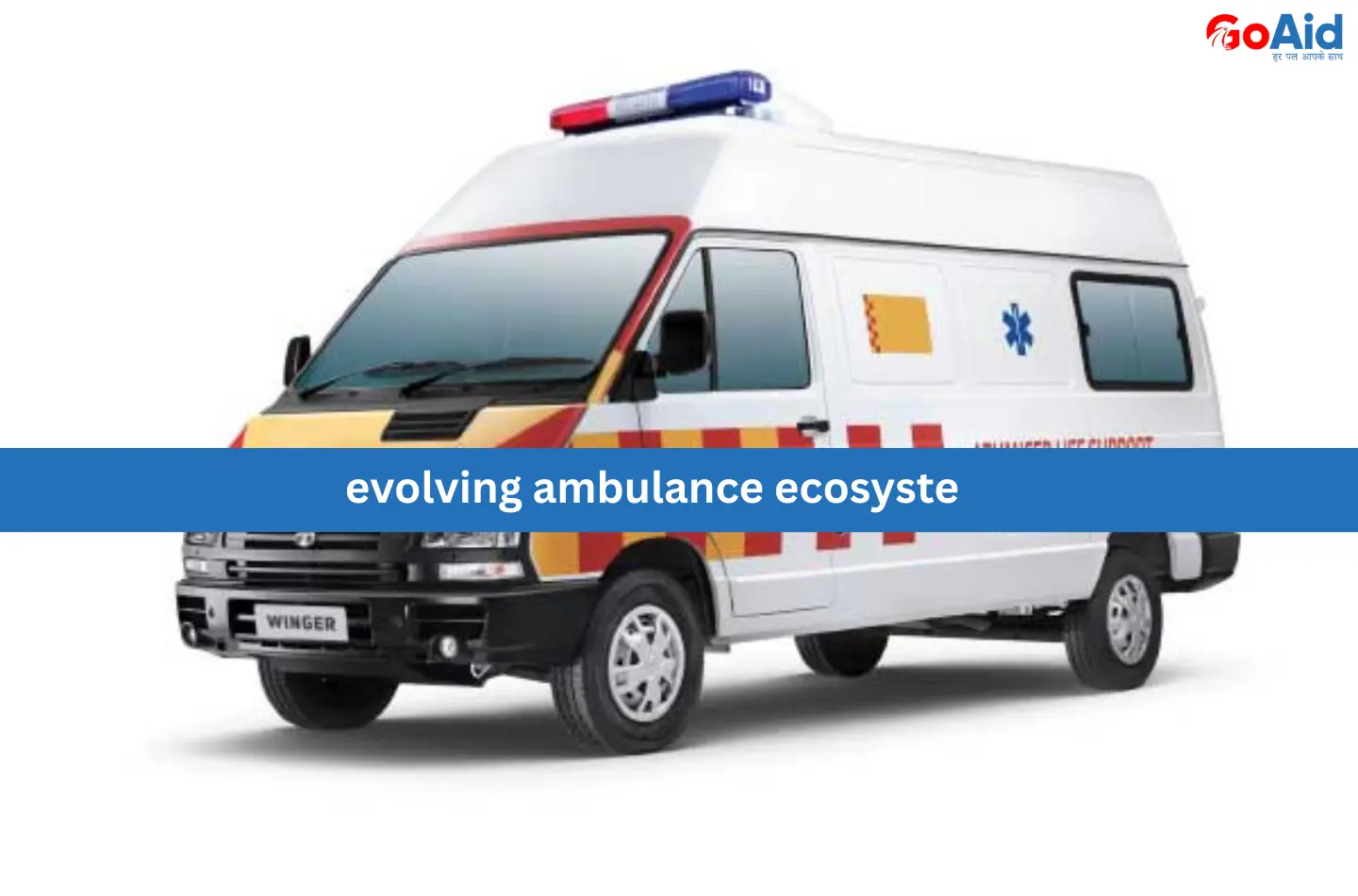

The ambulance service landscape in India is rapidly evolving with advancements in technology, healthcare innovation, and patient expectations. Traditional ambulance services are transforming into advanced mobile healthcare units that offer faster response, better medical care, and improved coordination with hospitals. Understanding these changes helps people recognize how modern ambulance services can improve emergency outcomes and ensure safer, more efficient patient transport across cities and regions.
This is why, in this blog, we have provided you all the information about the future of ambulance services in India and the trends and innovations shaping it. We have explained key aspects such as the role of technology in next-generation ambulances, smart ambulance systems, integration of AI and data-driven emergency response, expansion of air and interstate ambulance services, digital dispatch platforms, patient-centric care, sustainability initiatives, and how GoAid Ambulance Service is driving innovation.
Do you want to know all this information in detail? Then read this blog to the end.
So, let’s start-
Role of Technology in Future Ambulance Services
Technology is transforming the future of ambulance services in India. This enhances response times, pre-hospital care, and hospital coordination. GoAid Ambulance Service leverages healthcare innovation India-wide to provide efficient, AI-driven, and next-gen emergency medical transport.
1. Smart Ambulances with IoT
Next-gen ambulances equipped with IoT devices monitor patient vitals in real time. GoAid uses smart ambulances to transmit critical data to hospitals. This improves emergency medical technology and patient outcomes.
2. AI-Driven Dispatch Systems
AI in healthcare transport enables predictive route planning, traffic avoidance, and optimized ambulance allocation. GoAid Ambulance Service integrates AI to ensure faster response times and reliable emergency medical transport.
3. Digital Healthcare Platforms
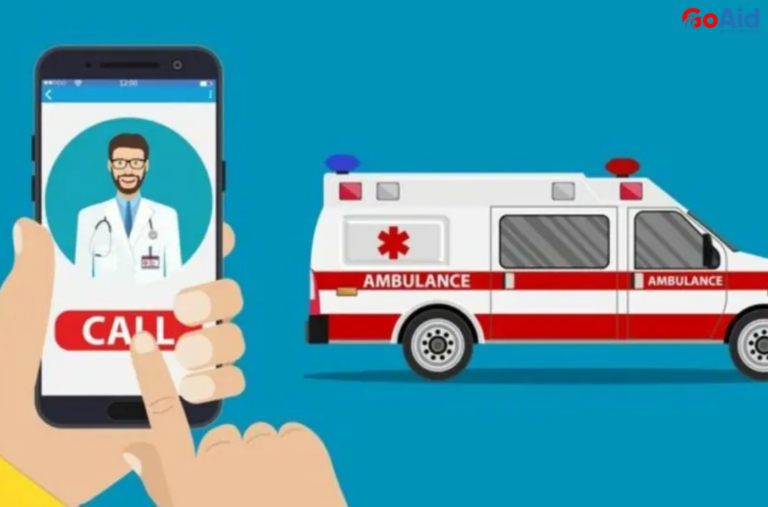
Mobile apps and online booking platforms streamline ambulance requests. GoAid’s digital platforms enhance patient-hospital connectivity and make emergency medical technology more accessible nationwide.
4. Telemedicine Integration
AI-powered telemedicine tools allow doctors to guide paramedics remotely. GoAid uses this to deliver advanced pre-hospital care. This supports real-time decision-making during critical patient transfer.
5. Predictive Analytics for Emergency Preparedness
Analyzing historical data helps anticipate high-demand periods and accident hotspots. GoAid leverages predictive analytics to deploy ambulances efficiently. This improves public safety healthcare and emergency medical response.
6. Remote Monitoring and Wearables
Next-gen ambulances integrate wearable devices for continuous patient monitoring. GoAid Ambulance Service uses this technology to track vitals and share updates with hospitals. This enhances patient hospital connectivity.
7. Integration with Smart Cities
AI in healthcare transport and IoT-enabled traffic management allow ambulances to navigate urban areas efficiently. GoAid’s innovation in smart ambulances contributes to faster critical patient transfer and emergency medical technology advancement in India.
Smart Ambulances and Advanced Medical Equipment
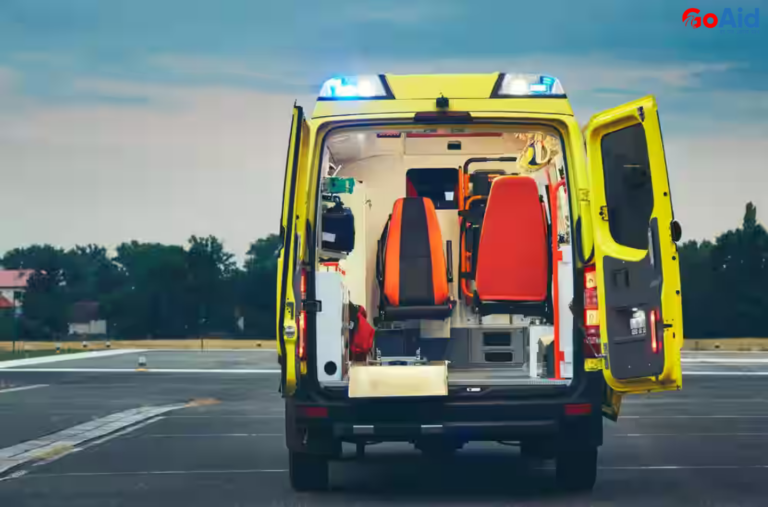
The future of ambulance services in India is being shaped by smart ambulances equipped with advanced medical technology. These next-gen ambulances feature integrated monitoring systems, ventilators, defibrillators, and telemedicine-enabled devices that allow real-time patient assessment during transit. GoAid Ambulance Service is at the forefront of adopting these innovations to enhance pre-hospital care and emergency medical transport.
Smart ambulances enable continuous monitoring of vitals such as heart rate, oxygen levels, and blood pressure, with data transmitted directly to hospital teams. This ensures that hospitals are prepared to receive patients immediately.
This reduces delays in critical patient transfer. The integration of advanced equipment, IoT-enabled devices, and mobile health apps allows paramedics to deliver high-quality pre-hospital care, stabilize patients, and perform advanced life support interventions en route.
By incorporating smart ambulance technology, GoAid Ambulance Service is setting a benchmark in healthcare innovation India-wide. This ensures faster response times, safer emergency transport, and better patient outcomes. These advancements demonstrate how technology is bridging gaps in public safety healthcare and redefining the future of ambulance services.
Integration of AI and Data-Driven Emergency Response
AI and data-driven technologies are revolutionizing emergency medical transport in India. GoAid Ambulance Service leverages AI in healthcare transport to optimize dispatch, predict high-demand areas, and improve response times for critical patient transfer.
Digital platforms collect historical data on accident-prone zones, peak hours, and emergency patterns, allowing AI algorithms to deploy ambulances efficiently, strengthening patient hospital connectivity and pre-hospital care.
Telemedicine and AI integration allow paramedics to receive real-time guidance from doctors while transporting patients. Predictive analytics also help allocate ICU, ventilator, and ALS ambulances proactively. This reduces delays during emergencies. GoAid uses AI-powered route optimization to navigate traffic, urban congestion, and long-distance transfers. This ensures rapid emergency medical response India-wide.
Furthermore, continuous data collection enhances training, operational efficiency, and emergency preparedness. By combining AI, predictive analytics, and mobile health apps, GoAid Ambulance Service delivers a data-driven, technology-enabled emergency healthcare system.
This approach improves patient outcomes, accelerates critical patient transfer, and sets the standard for next-generation ambulance services in India.
Expansion of Air and Interstate Ambulance Services
The expansion of air and interstate ambulance services is a key trend shaping the future of ambulance services in India. GoAid Ambulance Service provides rapid intercity and interstate critical patient transport, bridging gaps between hospitals and ensuring timely emergency medical response even across long distances.
Helicopter ambulances, fixed-wing air ambulances, and road-air hybrid systems enable life-saving care for patients in remote or underserved areas. This supports public safety healthcare nationwide.
Air ambulance services allow rapid transportation for cardiac, stroke, trauma, or ICU patients who require specialized care unavailable locally.
GoAid integrates GPS tracking, digital healthcare platforms, and telemedicine support to coordinate flights, prepare hospitals, and monitor patients continuously during transit. This ensures safe and efficient critical patient transfer while reducing mortality rates and complications.
Interstate ambulance services are similarly enhanced through AI-driven route planning, predictive analytics, and mobile health apps. This enables real-time hospital coordination. GoAid ensures uninterrupted integration between air and ground ambulances, maintaining patient hospital connectivity across cities and states.
By combining advanced technology, trained paramedics, and strategic logistics, GoAid Ambulance Service is redefining next-gen emergency medical transport in India. This makes air and interstate transfers faster, safer, and more reliable.
Digital Platforms and Automated Dispatch Systems
Digital platforms and automated dispatch systems are transforming the future of ambulance services in India. GoAid Ambulance Service leverages these technologies to enhance emergency medical transport, improve response times, and ensure uninterrupted patient hospital connectivity.
1. Mobile App Booking
GoAid’s digital platform allows instant ambulance booking via mobile apps. Patients and families can request emergency medical transport quickly, strengthening the ambulance healthcare link.
2. GPS-Enabled Ambulance Tracking
Automated dispatch systems track ambulances in real time. GoAid ensures hospitals and patients can monitor ambulance locations. This improves critical patient transfer efficiency.
3. AI-Powered Route Optimization
AI-driven algorithms determine the fastest routes to accident sites or hospitals. GoAid Ambulance Service reduces response times and ensures timely pre-hospital care.
4. Real-Time Communication with Hospitals
Digital platforms enable uninterrupted communication with hospital staff. GoAid relays patient vitals and intervention updates. This supports hospital coordination and emergency preparedness.
5. Prioritization of High-Risk Cases
Automated dispatch systems use predictive analytics to prioritize critical cases. GoAid ensures life-threatening emergencies receive immediate response. This enhances patient hospital connectivity.
6. Multi-Ambulance Coordination
During mass emergencies, the system manages multiple ambulances efficiently. GoAid’s technology supports emergency medical transport for several patients simultaneously, optimizing resources.
7. Data Analytics and Reporting
Digital platforms collect performance data for future improvements. GoAid uses insights from automated dispatch to enhance operational efficiency, patient outcomes, and emergency preparedness across India.
Focus on Patient-Centric Emergency Care
Patient-centric emergency care is the foundation of modern ambulance services. This ensures that every critical patient receives timely, safe, and effective pre-hospital care. GoAid Ambulance Service prioritizes patient needs by integrating advanced medical technology, trained paramedics, telemedicine support, and digital platforms to deliver personalized care during emergency medical transport.
During emergencies such as cardiac arrests, strokes, trauma, or critical ICU transfers, GoAid ambulances provide real-time monitoring of vitals, continuous medical intervention, and rapid stabilization. Specialized ambulances—ICU, ventilator, BLS, and ALS—are deployed based on patient requirements, demonstrating a patient-focused approach in pre-hospital care.
Digital healthcare platforms enable immediate ambulance booking, GPS tracking, and uninterrupted hospital coordination. This ensures that hospitals are ready to receive patients and continue care without delays. Telemedicine integration allows doctors to guide paramedics en route, further improving critical patient outcomes and bridging the gap between patients and hospitals.
By emphasizing patient safety, comfort, and individualized care, GoAid Ambulance Service enhances survival rates and builds public trust in emergency medical transport. This patient-centric approach, combined with AI, digital platforms, and smart ambulances, is shaping the future of emergency healthcare in India.
Sustainability and Eco-Friendly Ambulance Solutions
Sustainable and eco-friendly ambulance solutions are shaping the future of ambulance services in India. GoAid Ambulance Service explores green technologies, energy-efficient vehicles, and digital platforms to reduce environmental impact while maintaining rapid emergency medical transport and patient hospital connectivity.
1. Electric and Hybrid Ambulances
GoAid invests in electric and hybrid ambulances to minimize carbon emissions. These eco-friendly vehicles support sustainable emergency medical transport while ensuring timely pre-hospital care.
2. Energy-Efficient Medical Equipment
Advanced medical devices in ambulances are optimized for low energy consumption. GoAid Ambulance Service integrates eco-conscious equipment without compromising critical patient transfer capabilities.
3. GPS-Enabled Route Optimization
AI-driven route planning reduces fuel use by identifying the fastest, least congested paths. GoAid’s digital platforms enhance patient hospital connectivity while supporting sustainability initiatives.
4. Digital Patient Records
Paperless documentation minimizes waste. GoAid uses mobile health apps and digital platforms to track patient data, promoting eco-friendly pre-hospital care and hospital coordination.
5. Telemedicine Support
Remote doctor consultation reduces unnecessary hospital trips, conserving fuel and resources. GoAid integrates telemedicine to enhance patient-centric emergency medical transport sustainably.
6. Lightweight Ambulance Design
Next-gen ambulances feature energy-efficient lightweight materials. GoAid Ambulance Service reduces fuel consumption while maintaining safety and critical patient transfer capabilities.
7. Renewable Energy Charging Stations
Electric ambulances can use solar-powered or renewable energy charging stations. GoAid encourages eco-friendly emergency medical transport across urban and rural areas.
8. Eco-Friendly Waste Management
Proper disposal of medical waste is prioritized in GoAid ambulances. This supports sustainable pre-hospital care and strengthens public safety healthcare practices.
9. Fleet Management and Monitoring
AI-enabled fleet monitoring ensures efficient vehicle use. This reduces idle time and emissions. GoAid combines sustainability with timely emergency medical transport and hospital coordination.
10. Public Awareness and Training
GoAid trains paramedics and staff on eco-friendly practices and sustainable emergency protocols. This ensures patient hospital connectivity and pre-hospital care are delivered responsibly and environmentally conscious.
Challenges in Adopting New Innovations
Adopting new innovations in ambulance services faces multiple challenges, from infrastructure limitations to regulatory compliance. GoAid Ambulance Service navigates these hurdles to implement healthcare innovation India-wide, advancing emergency medical technology and next-gen ambulance services.
1. High Initial Investment
Implementing smart ambulances and advanced medical equipment requires substantial capital. GoAid balances cost with patient-centric emergency medical transport and sustainable healthcare innovation India-wide.
2. Training and Skill Development
Paramedics and staff must be trained for AI, telemedicine, and next-gen ambulances. GoAid invests in continuous training to ensure effective emergency medical technology usage.
3. Infrastructure Limitations
Electric or hybrid ambulances need charging stations and robust digital platforms. GoAid develops infrastructure solutions to support sustainable and innovative ambulance services.
4. Connectivity Challenges
Rural and remote areas may lack reliable network coverage. GoAid leverages GPS and offline-capable mobile health apps for continuous patient hospital connectivity.
5. Regulatory Compliance
Adopting new ambulance technology requires adherence to government norms. GoAid ensures all innovations, from smart ambulances to AI systems, comply with regulations in India.
6. Integration with Existing Systems
New technologies must work uninterruptedly with current hospital and emergency networks. GoAid integrates digital platforms for smooth emergency medical transport and hospital coordination.
7. Maintenance of Advanced Equipment
Smart ambulances and IoT devices require regular maintenance. GoAid ensures all next-gen ambulances are fully operational to maintain patient hospital connectivity.
8. Cybersecurity and Data Privacy
Digital platforms collect sensitive patient data. GoAid prioritizes secure telemedicine integration and mobile health apps for safe and reliable emergency medical transport.
9. Scalability Across Regions
Expanding innovations nationwide is complex. GoAid uses AI-driven dispatch and fleet management to scale healthcare innovation India-wide effectively.
10. Public Awareness and Acceptance
Patients and families must trust new technologies. GoAid promotes awareness. This ensures adoption of next-gen ambulances and emergency medical technology is accepted and effective.
How GoAid Is Shaping the Future of Ambulance Services?
GoAid Ambulance Service is leading the transformation of emergency medical transport in India through next-gen ambulances, digital healthcare platforms, and AI-driven innovations.
1. Implementation of Smart Ambulances
GoAid deploys IoT-enabled ambulances with advanced medical equipment. This ensures real-time monitoring and patient hospital connectivity during critical patient transfer.
2. AI-Driven Emergency Response
AI algorithms optimize dispatch, route planning, and high-priority case allocation. This enhances efficiency in emergency medical technology and patient-centric care.
3. Telemedicine Integration
Paramedics consult doctors in real time using telemedicine platforms. This improves pre-hospital care, critical patient transfer, and emergency preparedness.
4. Expansion of Air and Interstate Services
GoAid leverages air and long-distance ambulance transport to provide timely emergency medical response and patient hospital connectivity nationwide.
5. Focus on Sustainability
Electric and hybrid ambulances, energy-efficient equipment, and digital records support eco-friendly emergency medical transport and sustainable healthcare innovation India-wide.
6. Training and Skill Development
GoAid invests in continuous staff training for AI, telemedicine, and advanced pre-hospital care techniques. This ensures effective use of emergency medical technology.
7. Nationwide Digital Platforms
Mobile apps and online booking platforms improve patient access, optimize ambulance dispatch, and enhance hospital coordination, redefining the future of ambulance services in India.
Conclusion
In conclusion, we have provided you all the details about the future of ambulance services in India and how innovations are transforming emergency medical transport. GoAid Ambulance Service is leading the way with smart ambulances, AI-driven dispatch, telemedicine integration, and sustainable solutions.
By focusing on patient-centric emergency care, advanced pre-hospital interventions, and uninterrupted hospital coordination, GoAid ensures rapid, reliable, and safe critical patient transfer.
Its adoption of next-gen technologies, digital platforms, and nationwide fleet expansion is setting benchmarks for healthcare innovation India-wide. This improves patient outcomes, emergency preparedness, and public safety healthcare for years to come.
FAQs
Q1: What are smart ambulances and how do they help?
Answer: Smart ambulances are equipped with IoT devices, advanced medical equipment, and telemedicine support. GoAid uses them to monitor vitals in real time. This improves pre-hospital care and ensuring critical patient transfer with uninterrupted patient hospital connectivity.
Q2: How is AI used in ambulance services?
Answer: AI in healthcare transport enables predictive dispatch, route optimization, and high-priority case management. GoAid Ambulance Service leverages AI to enhance emergency medical response, patient-centric care, and hospital coordination nationwide.
Q3: Can GoAid handle intercity and interstate patient transfers?
Answer: Yes. GoAid provides 24×7 emergency medical transport across cities and states, including air ambulance services. This ensures timely critical patient transfer and reliable patient hospital connectivity.
Q4: How does GoAid support sustainability in ambulance services?
Answer: GoAid Ambulance Service uses electric and hybrid ambulances, energy-efficient medical equipment, and digital records to provide eco-friendly emergency medical transport while maintaining effective pre-hospital care and hospital coordination.
Q5: How is patient-centric care ensured during transfers?
Answer: GoAid focuses on continuous monitoring, telemedicine guidance, advanced pre-hospital interventions, and trained paramedics in ICU, BLS, and ALS ambulances. This ensures safe, timely, and patient-focused emergency medical transport.