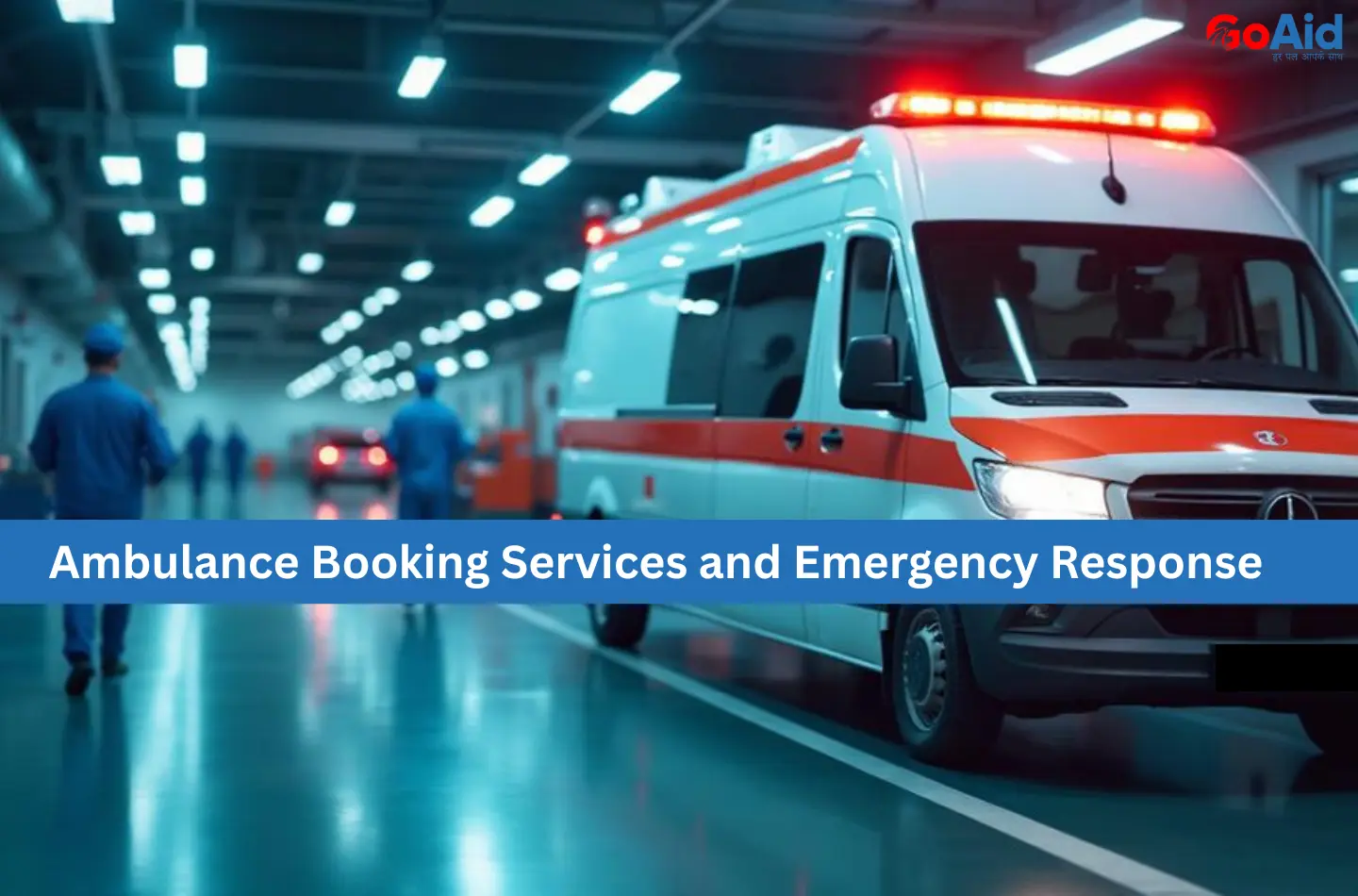

Ambulance booking services play a crucial role in modern emergency healthcare by ensuring fast and organized medical emergency response. Instead of relying on uncertain local contacts, people can now access timely emergency ambulance booking through structured systems. The reliable ambulance services, such as GoAid, focus on rapid dispatch and proper coordination with hospitals. In critical situations such as accidents, cardiac issues, or strokes, a reliable ambulance booking system becomes the first lifesaving link between the patient and advanced medical care.
Why Time Is Critical in Medical Emergencies?
Time is the most decisive factor during any medical emergency response. Conditions like cardiac arrest, stroke, severe trauma, or respiratory failure require immediate medical attention, where even a few minutes can determine survival or long-term damage.
A fast ambulance service ensures patients receive oxygen support, monitoring, and stabilization while being transported to the right hospital. Delays in emergency ambulance service often worsen outcomes by increasing complications and reducing treatment effectiveness.
Quick emergency ambulance booking helps activate trained paramedics early, reduces panic-driven decisions, and supports hospitals in preparing in advance. Efficient ambulance booking services, therefore, directly impact survival rates, recovery time, and overall emergency care outcomes.
Common Delays Faced in Traditional Ambulance Booking
Traditional ambulance booking methods often depend on phone calls, local operators, and manual coordination, which can create avoidable delays during emergencies. These delays can be dangerous when immediate medical support is required.
- Delayed Call Connections: Reaching a reliable emergency ambulance service through phone calls often involves unanswered lines, repeated dialing, or call transfers, wasting crucial minutes during a medical emergency response.
- Lack of Nearest Ambulance Information: Traditional systems rarely identify the closest available ambulance, causing vehicles to travel longer distances instead of ensuring a fast ambulance service.
- Manual Address Communication Errors: Explaining locations verbally can lead to misunderstandings, wrong routes, or incorrect landmarks, delaying emergency ambulance booking and arrival time.
- Dependence on Local Operators: Many local providers operate limited vehicles, making availability uncertain during peak hours or multiple emergencies.
- No Real-Time Tracking: Families and responders cannot track ambulance movement, increasing anxiety and reducing coordination with hospitals.
- Delayed Dispatch Decisions: Manual confirmation of drivers and vehicles slows down the dispatch process compared to automated systems.
- Unclear Pricing Discussions: Time is lost negotiating charges during emergencies, instead of focusing solely on rapid medical emergency response.
Role of Technology in Faster Ambulance Dispatch
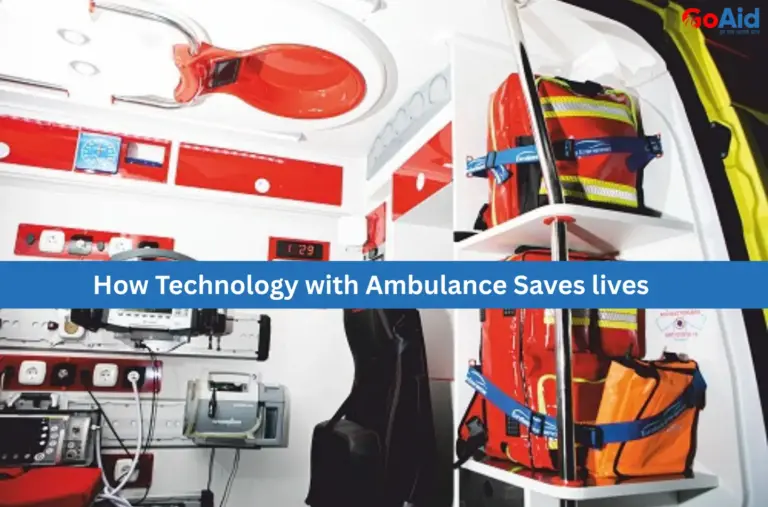
Technology has transformed emergency ambulance booking by replacing manual coordination with automated, data-driven systems that ensure faster response, accurate routing, and improved medical emergency response during critical situations.
- GPS-Based Nearest Ambulance Allocation: Advanced systems automatically identify and assign the nearest available ambulance, reducing travel distance and ensuring a fast ambulance service during time-sensitive emergencies.
- Automated Dispatch Systems: Digital dispatch platforms eliminate manual confirmation delays, instantly alerting drivers and paramedics once emergency ambulance booking is confirmed.
- Real-Time Traffic Navigation: Smart routing tools analyze live traffic conditions and suggest the fastest routes, helping ambulances avoid congestion and reach patients more quickly.
- Digital Address Mapping: Technology converts shared locations into precise map coordinates, minimizing navigation errors and improving emergency ambulance service accuracy.
- Instant Hospital Coordination: Technology-enabled dispatch allows hospitals to receive early alerts, improving preparedness and reducing treatment delays upon arrival.
- Live Ambulance Tracking: Real-time tracking keeps families informed and helps control teams monitor movement, improving coordination and transparency.
- Data-Driven Performance Monitoring: Technology tracks response times and outcomes, helping ambulance booking services continuously optimize speed and efficiency.
How Online Ambulance Booking Works?
Online ambulance booking simplifies emergency response by allowing users to request help instantly through digital platforms. Instead of calling multiple operators, users enter basic details such as location, patient condition, and ambulance type. The system immediately identifies the nearest available vehicle and dispatches it.
GPS technology ensures accurate routing, while real-time tracking keeps families informed throughout the journey. Online systems also enable faster coordination between paramedics and hospitals, improving medical emergency response efficiency.
Transparent pricing and predefined ambulance options remove confusion during stressful moments. By reducing manual steps and delays, online ambulance booking ensures faster decision-making, quicker dispatch, and more reliable emergency care when every second matters.
Urban vs Rural Emergency Response Challenges
Emergency response effectiveness varies greatly between urban and rural areas due to differences in infrastructure, ambulance availability, and healthcare access, directly impacting emergency ambulance service outcomes.
- Traffic Congestion in Urban Areas: Heavy traffic and busy roads in cities often delay ambulance movement, despite shorter distances, affecting fast ambulance service delivery.
- Limited Ambulance Access in Rural Regions: Rural areas often face shortages of ambulances, leading to longer response times during medical emergencies.
- Navigation Difficulties in Villages: Poor road signage and unmapped locations make it difficult for ambulances to reach rural patients quickly.
- Hospital Distance Challenges: Rural patients usually require long-distance transfers to advanced hospitals, increasing dependency on reliable ambulance booking services.
- Urban Overload of Emergency Calls: High population density in cities leads to multiple simultaneous emergencies, stretching ambulance availability.
- Infrastructure Gaps in Rural Areas: Poor road conditions and lack of night lighting slow down emergency ambulance service operations in villages.
- Technology Adoption Differences: Urban regions benefit more from online ambulance booking and tracking, while rural areas still rely on traditional methods, causing response delays.
How GoAid Optimizes Emergency Response Time?
GoAid Ambulance uses technology, trained teams, and streamlined processes to ensure faster medical emergency response, reducing delays and delivering timely care through a reliable emergency ambulance service across multiple cities.
- 10-Minute Ambulance Dispatch Model: GoAid follows a rapid-response system designed to dispatch the nearest available ambulance within minutes, supporting fast ambulance service during critical medical emergencies.
- Smart GPS-Based Allocation: GoAid uses GPS technology to identify the closest ambulance, minimizing travel distance and improving emergency ambulance booking efficiency.
- Dedicated Control Center Operations: A centralized command system continuously monitors bookings, drivers, and routes to avoid manual delays in emergency ambulance service dispatch.
- Experienced Paramedic Teams: Trained paramedics ensure quick on-ground action, patient stabilization, and efficient coordination during medical emergency response.
- Real-Time Traffic Route Optimization: Live traffic analysis helps GoAid ambulances choose the fastest routes, reducing response time in congested urban areas.
- 24 Hours Ambulance Service Availability: GoAid maintains round-the-clock readiness, ensuring emergency ambulance booking remains uninterrupted day and night.
- Hospital Coordination Before Arrival: Advance hospital alerts allow medical teams to prepare early, saving critical treatment time upon ambulance arrival.
Why GoAid Is One of the Best Ambulance Services?
GoAid has earned trust through reliable operations, transparent systems, and patient-focused care, making it a preferred choice for emergency ambulance service across India.
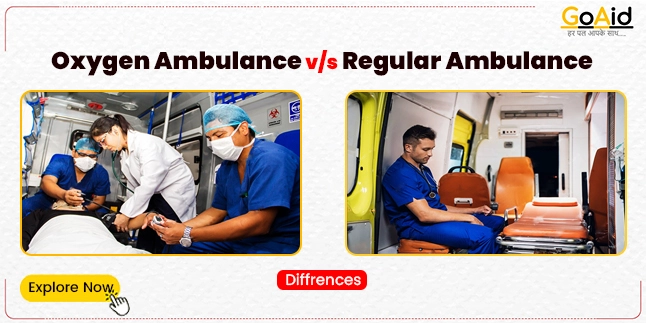
- Wide Range of Ambulance Types: GoAid offers normal, BLS, ALS, ICU ventilator, and specialty ambulances to match every medical emergency response requirement.
- Fast and Reliable Response Time: With a strong operational network, GoAid consistently delivers fast ambulance service during time-sensitive emergencies.
- Government-Approved and Affordable Pricing: Transparent, regulated pricing ensures patients receive quality emergency ambulance service without unexpected charges.
- Trained Medical and Support Staff: Skilled paramedics and sensible helpers ensure safe patient handling and professional care during transport.
- Pan-City and Interstate Coverage: GoAid operates across major cities and supports intercity transfers, strengthening emergency ambulance booking reliability.
- Technology-Driven Booking System: Digital platforms reduce delays, improve coordination, and enhance overall medical emergency response efficiency.
- Commitment to Patient Safety and Trust: GoAid prioritizes ethical practices, safety protocols, and consistent service quality, reinforcing its reputation as a best ambulance service.
How to Book GoAid Ambulance Service?
GoAid offers multiple easy booking options to ensure quick access to emergency ambulance service during medical emergencies, without confusion or delays.
Book GoAid Ambulance Through the Mobile App: The GoAid mobile app allows instant emergency ambulance booking, automatically locating the nearest ambulance, and enabling real-time tracking for faster response.
Book GoAid by Official Website: Users can book ambulances directly through the official website, ensuring quick access to verified ambulance booking services.
GoAid 24/7 Helpline for Emergency Ambulance Booking: Call 8008280020 anytime to connect with GoAid’s support team for immediate emergency ambulance service assistance.
Future of Emergency Ambulance Booking in India
The future of ambulance booking services in India is moving toward faster, smarter, and more integrated emergency healthcare. Technology-driven platforms will further reduce response time through AI-based dispatch, predictive ambulance placement, and real-time hospital coordination.
Online ambulance booking will become more accessible even in semi-urban and rural areas, improving nationwide medical emergency response. Integration with smart city infrastructure, traffic control systems, and digital health records will enable faster ambulance service delivery.
As awareness increases, people will rely more on organized emergency ambulance booking instead of local operators. With continued innovation and expansion, structured ambulance networks like GoAid Ambulance will play a crucial role in strengthening India’s emergency healthcare ecosystem.
Conclusion to How Ambulance Booking Services Save Critical Time
Ambulance booking services play a life-saving role by reducing delays during medical emergencies. Fast ambulance service and technology-driven dispatch ensure timely medical emergency response. Online ambulance booking eliminates uncertainty and improves coordination with hospitals. Services like GoAid Ambulance demonstrate how a structured emergency ambulance service can save critical time, improve patient outcomes, and build trust in emergency healthcare systems.
FAQs related to Ambulance Booking Services Saving Time
Question-1: How do ambulance booking services save time during emergencies?
Answer: Ambulance booking services reduce delays by enabling quick dispatch, nearest ambulance allocation, and faster medical emergency response through technology-based systems.
Question 2: Why is a fast ambulance service important in medical emergencies?
Answer: Fast ambulance service ensures early medical support, timely hospital arrival, and better survival chances during critical conditions like cardiac arrest or stroke.
Question-3: How does online ambulance booking improve emergency response?
Answer: Online ambulance booking eliminates manual coordination, enables instant dispatch, and improves communication between ambulances and hospitals.
Question-4: Are ambulance booking services available 24 hours?
Answer: Yes, most organized emergency ambulance service providers operate 24 hours ambulance service to handle emergencies at any time.
Question-5: How does technology help emergency ambulance booking?
Answer: Technology supports GPS tracking, automated dispatch, and real-time updates, making medical emergency response faster and more reliable.
Question-6: Can ambulance booking services handle critical patients?
Answer: Yes, structured services provide access to BLS, ALS, and ICU ambulances based on patient needs during emergencies.
Question-7: Is online ambulance booking safe during emergencies?
Answer: Yes, online systems are designed for quick, secure bookings and ensure verified ambulances reach patients promptly.
Question-8: How does the emergency ambulance service help hospitals prepare?
Answer: Early alerts from ambulance booking systems allow hospitals to prepare equipment and staff before patient arrival.
Question-9: Do ambulance booking services work in rural areas?
Answer: While challenges exist, expanding networks and technology are gradually improving emergency ambulance service reach in rural regions.
Question-10: Why choose GoAid Ambulance for emergency booking?Answer: GoAid Ambulance offers fast response, trained paramedics, transparent pricing, and reliable emergency ambulance booking across multiple cities.