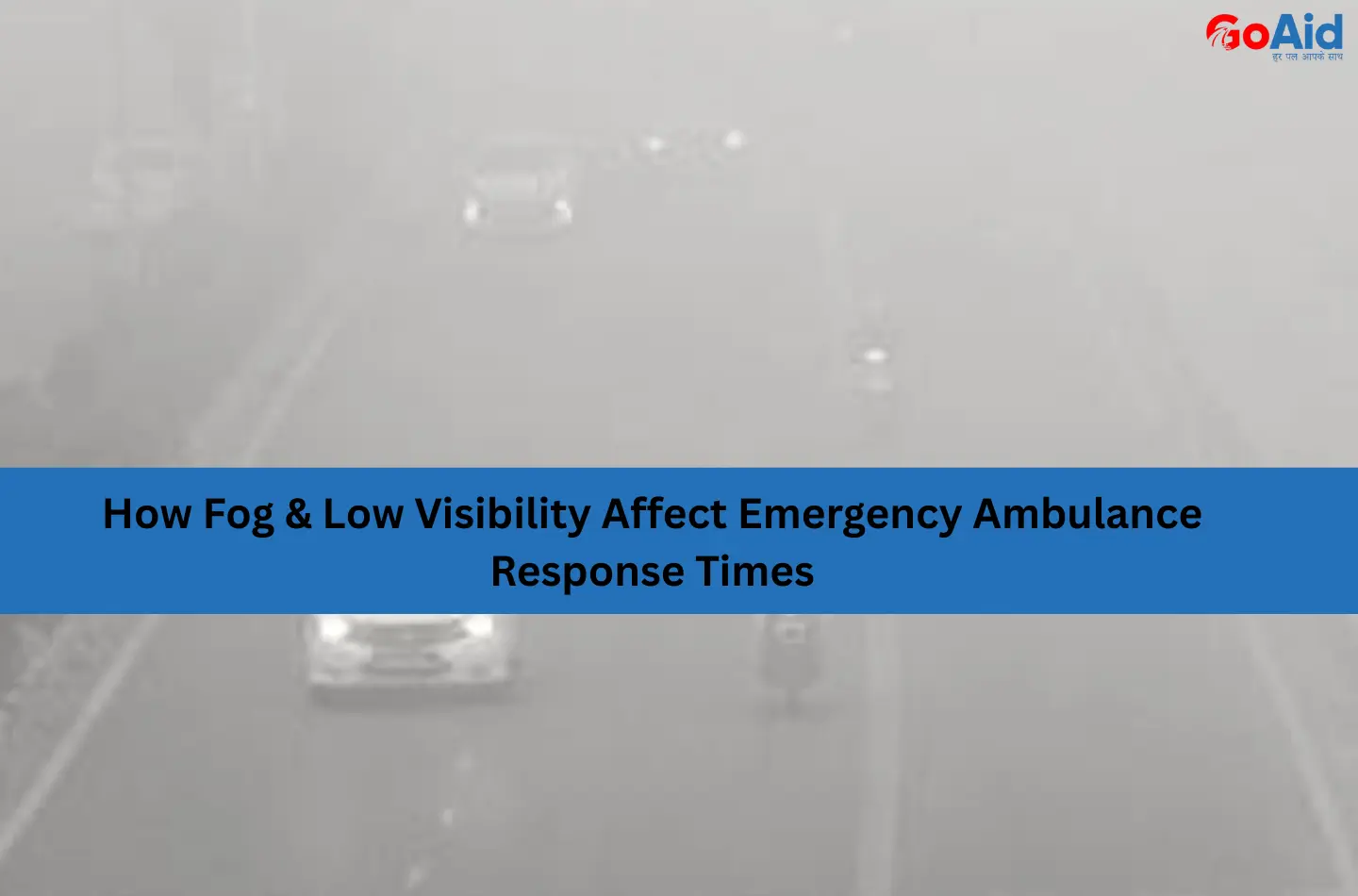

In winters, fog and ambulance response time become a critical concern, as dense mist and low visibility ambulance delay increase risks on the road. In such conditions, ambulance response in fog slows down significantly, which affects patient safety.
GoAid ambulance fog response teams work harder during the winter season to ensure every life receives fast and uninterrupted care, even in challenging weather.
How Fog Reduces Road Visibility and Slows Down Ambulances?
Fog drastically reduces how far drivers can see, and this directly impacts fog and ambulance response time during the winter months. When visibility drops, ambulance response in fog becomes slower because drivers must reduce speed to avoid accidents. Low visibility ambulance delay also occurs when road markings and obstacles become hard to identify.
This creates additional challenges for fast ambulance service providers. During the emergency ambulance winter season, even trained drivers face difficulty judging distances. Despite these obstacles, the GoAid ambulance fog response team follows strict safety protocols to maintain a stable speed & prevent collisions, and ensure safer emergency travel.
Impact of Low Visibility on Navigation and Route Planning
Low visibility increases fog and ambulance response time by disrupting navigation accuracy. It also causes low visibility ambulance delay because drivers struggle to identify routes and traffic conditions during emergencies.
- Difficulty Identifying Road Signs: Fog blurs road signs, making ambulance response in fog slower because drivers must move cautiously to confirm directions.
- Reduced Accuracy of Distance Judgment: Low visibility forces drivers to slow down, increasing low visibility ambulance delay and affecting planned arrival times.
- Challenges in Spotting Turns and Exits: Missed turns during the emergency ambulance winter season extend travel routes and delay patient reach.
- Confusion in High-Traffic Zones: Fog reduces clarity in crowded areas, slowing fast ambulance service movement due to uncertain traffic flow.
- Difficulty Avoiding Road Obstacles: Hidden obstacles increase risks, affecting fog and ambulance response time as drivers adjust speed and direction.
- Delays in Choosing Alternative Routes: Backup emergency paths become unclear, causing unexpected low visibility ambulance delay when rerouting.
- Slower Reaction to GPS Guidance: Even with GPS, fog reduces visual confirmation, making GoAid ambulance fog response techniques essential for safe navigation.
Challenges in Locating Patients During Low Visibility
In dense fog, locating patients becomes a major obstacle, which increases fog and ambulance response time. Low visibility ambulance delay is common, and GoAid ambulance fog response teams must navigate carefully to reach patients safely.
- Difficulty Spotting Houses or Landmarks: Reduced visibility makes it hard to identify exact patient locations, increasing ambulance response in fog and causing delays in emergency ambulance winter season operations.
- Confusion with Street Names: Fog blurs street signs, making GoAid emergency ambulance navigation slower and adding to the low visibility ambulance delay.
- Hidden Driveways or Entrances: Narrow or hidden entry points are difficult to spot, slowing fog and ambulance response time.
- Limited Visual Cues at Night: Nighttime fog further reduces visibility, affecting fast ambulance service and timely patient reach.
- Obstructed Building Numbers: Missing or unclear building numbers cause ambulance response in fog to take longer than expected.
- Difficulty in Large Complexes: Locating patients in hospitals or apartment complexes becomes challenging during low visibility, increasing emergency ambulance winter season delays.
- Reliance on Caller Guidance: Paramedics depend heavily on patient or bystander instructions to navigate safely, which is crucial for GoAid ambulance fog response efficiency.
How GoAid Ensures Timely Response Even in Foggy Weather?
GoAid maintains a fast ambulance service during winter fog by trained staff and strict protocols. Emergency ambulance winter season delays are minimised with precise planning and execution.
- Advanced Weather Monitoring: GoAid monitors fog patterns in real-time to anticipate low visibility ambulance delay and adjust ambulance response in fog accordingly.
- Optimised Route Planning: Routes are pre-assessed for fog-prone areas, reducing fog and ambulance response time.
- Experienced Drivers and Paramedics: GoAid emergency ambulance teams are trained to navigate safely through winter fog, ensuring fast ambulance service.
- High-Visibility Lights and Sirens: Specialised lighting helps drivers maintain speed safely, improving ambulance response in fog.
- Communication with Traffic Authorities: Coordination ensures minimal delays from traffic congestion, reducing low-visibility ambulance delays.
- Backup Ambulance Deployment: Additional vehicles are pre-positioned to maintain 10-minute ambulance service during peak fog periods.
- Real-Time GPS Tracking: Continuous tracking allows GoAid ambulance fog response teams to adapt quickly and reach patients efficiently despite poor visibility.
Advanced GPS & Tracking Systems Used by GoAid in Low Visibility
GoAid uses state-of-the-art GPS and tracking systems to reduce fog and ambulance response time during low visibility. Low-visibility ambulance delay is minimized as real-time tracking ensures precise navigation.
Ambulance response in fog is improved through route optimisation, which allows GoAid emergency ambulance teams to adjust to traffic, fog density, and roadblocks. A fast ambulance service is maintained even in winter fog emergency ambulance scenarios.
These systems provide continuous updates, monitor ambulance speed, and track patient locations. GoAid ambulance fog response leverages technology to maintain safety, efficiency, and timely arrival during challenging weather conditions.
Training GoAid Paramedics and Drivers for Fog-Related Emergencies
GoAid paramedics and drivers undergo rigorous training to handle winter fog emergency ambulance situations. Ambulance response in fog is enhanced by teaching techniques to minimise fog and ambulance response time. Training includes driving in low visibility, using GPS efficiently, and following safety protocols for low visibility ambulance delay reduction.
GoAid emergency ambulance winter season programs focus on quick decision-making, patient care under adverse conditions, and safe navigation. A fast ambulance service is ensured by practising simulated fog scenarios. GoAid ambulance fog response relies on trained personnel who can maintain speed, efficiency, and patient safety even in dense fog.
How to Book a GoAid Ambulance?
The booking process of a GoAid ambulance is fast and easy, which ensures a 10 minute ambulance service during emergencies. You can choose mobile, web, or helpline options to request a GoAid emergency ambulance quickly.
Book GoAid Ambulance Through the Mobile App: Open the GoAid mobile app, enter your location, choose the ambulance type, and request fast ambulance service immediately.
Book GoAid by Official Website: Visit GoAid, fill in your details, and schedule emergency ambulance winter season support for quick and reliable care.
GoAid 24/7 Helpline for Emergency Ambulance Booking: Call 8008280020 anytime for immediate GoAid ambulance fog response, which ensures low visibility ambulance delay is minimised.
Why Public Awareness Is Important During Fog Season
Public awareness during dense fog is critical to reducing accidents and low visibility ambulance delays. If you understand these risks, then it helps drivers cooperate with GoAid ambulance fog response teams and ensures fast ambulance service in emergencies.
- Drive Slowly and Carefully: Fog reduces visibility, so cautious driving helps minimise fog and ambulance response time and supports emergency ambulance winter season safety.
- Use Headlights Properly: Low beam and fog lights improve visibility, assisting ambulance response in fog and reducing delays for GoAid emergency ambulance teams.
- Keep Safe Distance: Maintaining distance prevents accidents, reduces low visibility ambulance delay and ensures fast ambulance service reaches patients promptly.
- Avoid Overtaking Recklessly: Risky manoeuvres worsen fog and ambulance response time; following rules helps GoAid ambulance fog response reach emergencies safely.
- Follow Traffic Updates: Listening to alerts helps plan routes efficiently, minimising emergency ambulance winter season delays and low visibility ambulance delays.
- Report Accidents Promptly: Timely reporting allows GoAid emergency ambulance teams to respond quickly, improving fog and ambulance response time.
- Stay Prepared for Emergencies: Local ambulance numbers and services ensure fast ambulance service, supporting GoAid ambulance fog response during winter fog emergency ambulance situations.
Conclusion to How Fog & Low Visibility Affect Emergency Ambulance Response Times
Fog and low visibility significantly increase ambulance response in fog, causing low visibility ambulance delay. GoAid emergency ambulance ensures fast ambulance service through GPS, trained paramedics, and strategic planning during winter fog emergency ambulance situations.
FAQs Related to How Fog & Low Visibility Affect Emergency Ambulance Response Times
Question-1: How does fog affect ambulance response time?
Answer: Dense fog reduces visibility, slows driving, and increases low visibility ambulance delay, but GoAid ambulance fog response minimises risks and ensures fast ambulance service.
Question 2: What measures does GoAid take during low visibility?
Answer: GoAid uses advanced GPS, trained drivers, and optimised routes to reduce fog and ambulance response time and maintain emergency ambulance winter season efficiency.
Question-3: Can I book a GoAid ambulance during foggy conditions?
Answer: Yes, you can use the GoAid mobile app, website, or 24/7 helpline to request fast ambulance service even in dense fog.
Question-4: How long does it take for the GoAid ambulance to arrive in fog?
Answer: GoAid provides 10 minute ambulance service on average, which minimises low visibility ambulance delay despite challenging winter fog conditions.
Question-5: Are GoAid paramedics trained for fog-related emergencies?
Answer: Yes, all GoAid emergency ambulance teams undergo specialised training to navigate safely and maintain ambulance response in fog efficiently.
Question 6: Why is public awareness important during fog season?
Answer: Awareness helps drivers cooperate with GoAid ambulance fog response, reduces accidents, and ensures fast ambulance service during emergency ambulance winter season situations.