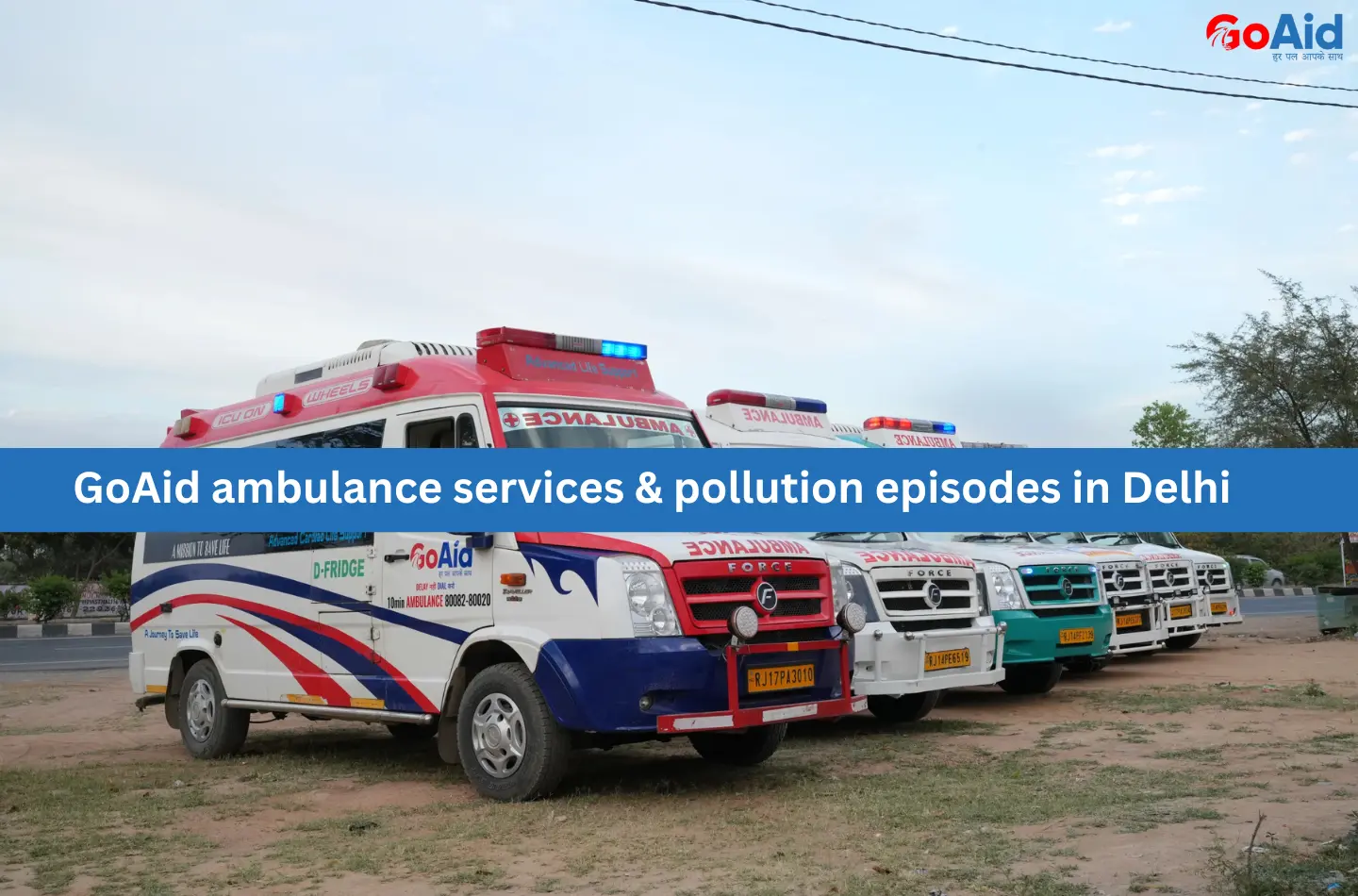

During severe pollution episodes in Delhi, the number of medical emergencies rises sharply, putting immense pressure on healthcare services. Timely ambulance support becomes crucial for patients suffering from respiratory distress, cardiac issues, and other pollution-related emergencies. Quick response, specialized care, and access to the right ambulance can make all the difference between life and death.
This is why, in this blog, we have provided you all the information about the topic. We have explained the major pollution-related emergencies in Delhi, GoAid’s rapid 10-minute response feature, types of ambulances available, oxygen and ICU ambulance services, how expert paramedic assistance helps during smog emergencies, and more. Are you willing to know all these information in detail? Then read our blog to the end.
So, let’s start-
What are Major Pollution-Related Emergencies in Delhi?
Severe pollution in Delhi often triggers sudden medical complications, especially among children, elderly people, and patients with chronic diseases. Here are the major emergencies commonly reported during extreme smog conditions.
1. Acute Breathing Difficulty
Extreme AQI levels irritate the airways. This causes sudden breathlessness. Patients with asthma, COPD, or heart problems experience faster deterioration. Immediate oxygen support and quick medical attention become crucial to prevent severe hypoxia and respiratory failure.
2. Asthma Attacks
Toxic pollutants inflame the bronchial tubes, triggering intense asthma attacks. Symptoms include wheezing, tight chest, and inability to inhale properly. Without timely intervention, attacks can escalate rapidly, requiring nebulization or ICU-level respiratory care.
3. Heart-Related Emergencies
Polluted air increases the workload on the heart by reducing oxygen availability. It often leads to palpitations, chest pain, or cardiac stress. High-risk groups like seniors and cardiac patients may require emergency ECG monitoring or cardiac ambulance support.
4. Severe Coughing & Airway Irritation
Continuous exposure to smog causes persistent coughing that may turn severe and painful. This can lead to throat infections, bronchitis flare-ups, and difficulty sleeping or breathing, especially among kids and elderly individuals.
5. COPD Exacerbations
Patients with Chronic Obstructive Pulmonary Disease experience sharp deterioration during high pollution. Increased mucus production, wheezing, and airway swelling can lead to dangerous flare-ups requiring oxygen and advanced respiratory care during transport.
6. Allergic Reactions & Eye Irritation
High particulate levels often lead to allergic responses, including watery eyes, rashes, burning sensations, and sinus aggravation. These symptoms can worsen quickly, needing medical assessment or safe transport to specialists.
7. Pediatric Respiratory Distress
Children inhale more air relative to body weight. This makes them highly vulnerable. Smog can trigger sudden breathlessness, rapid breathing, and chest tightness. Pediatric emergencies often require specialized ventilator or ICU ambulance assistance.
8. Senior Citizen Breathing Collapse
Elderly people with weak lungs or chronic diseases often suffer sudden respiratory collapse. Pollution makes it difficult for them to maintain oxygen levels. This makes rapid transportation with oxygen support crucial.
9. Viral or Infection Complications
Pollution weakens immunity. This allows viral or bacterial infections to worsen. Patients may experience fever, congestion, and lung infections, which require timely medical transport for diagnosis and treatment.
10. Anxiety & Panic Due to Breathlessness
Pollution-induced breathlessness often triggers panic attacks, especially among individuals with anxiety disorders. Their symptoms can mimic cardiac or respiratory emergencies and require safe, supported transportation to medical facilities.
Rapid 10-Minute Response Feature
GoAid’s 10-minute rapid response ensures patients get immediate help during pollution emergencies when every second matters.
1. Quick Dispatch From Nearest Ambulance
GoAid’s system automatically assigns the closest available ambulance. This reduces waiting time drastically. This ensures that patients suffering from breathlessness or asthma attacks receive urgent assistance without delays.
2. Real-Time GPS Tracking for Faster Navigation
Ambulances use high-precision GPS routing to cut through traffic efficiently. This helps avoid congestion caused by winter smog and ensures the medical team reaches the patient in minimal time.
3. Pre-Alerted Paramedic Team
Before arrival, paramedics receive case details so they are fully prepared with oxygen cylinders, nebulizers, or first-response equipment. This readiness is crucial in stabilizing the patient instantly upon reaching the location.
4. Priority Support for Respiratory Distress Cases
During severe pollution days, GoAid prioritizes cases involving children, elderly individuals, and respiratory patients. This targeted approach ensures vulnerable individuals receive faster and more specialized care.
5. Dedicated Emergency Hotline: 8008280020
Patients or families can immediately book an ambulance by calling the helpline. The system is designed to respond instantly and dispatch support without bureaucratic delays or long verification processes.
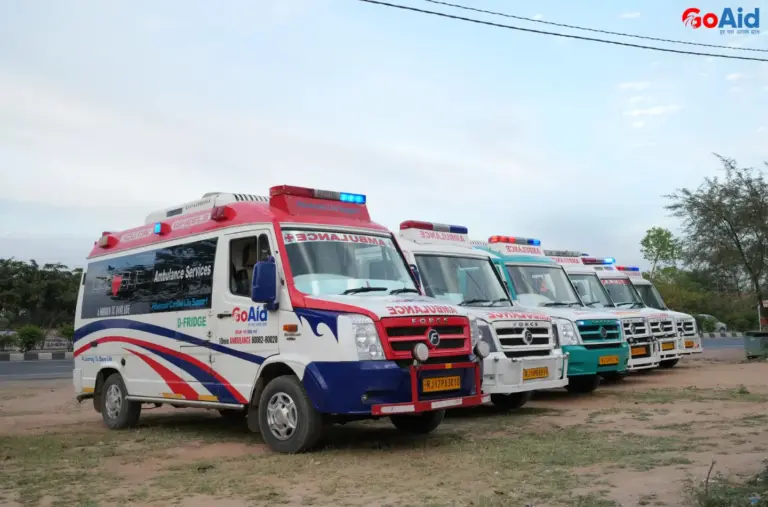
6. Wide Fleet Availability for High-Demand Days
During pollution peaks, demand increases sharply. GoAid ensures extra ambulances are on standby so patients don’t face waiting periods even when call volumes rise significantly.
7. Seamless Hospital Coordination
While en route, GoAid can coordinate with nearby hospitals based on the patient’s condition. This helps reduce admission time and ensures that critical patients receive immediate care upon arrival.
Types of Ambulances Provided by GoAid
GoAid offers a specialized fleet of ambulances designed to handle different levels of pollution-related and medical emergencies in Delhi. This ensures timely and safe patient transport.
1. Basic Life Support (BLS) Ambulance
BLS ambulances are ideal for non-critical patients who require safe transportation during pollution-related discomfort. They are equipped with first-aid supplies, oxygen cylinders, trained staff, and basic monitoring devices. These vehicles ensure timely assistance for patients with mild breathing issues or chronic conditions needing supervised movement.
2. Advanced Life Support (ALS) Ambulance
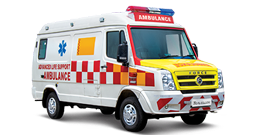
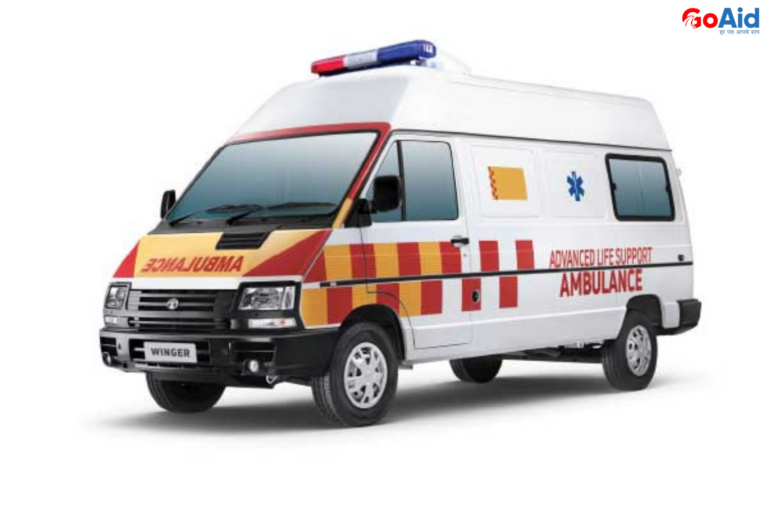
ALS ambulances offer high-level care for serious respiratory and cardiac emergencies. They include advanced ventilators, cardiac monitors, defibrillators, and trained paramedics. During severe pollution episodes, ALS units stabilize patients with dangerously low oxygen levels or acute asthma. This ensures safe transport under expert medical supervision.
3. ICU Ambulance
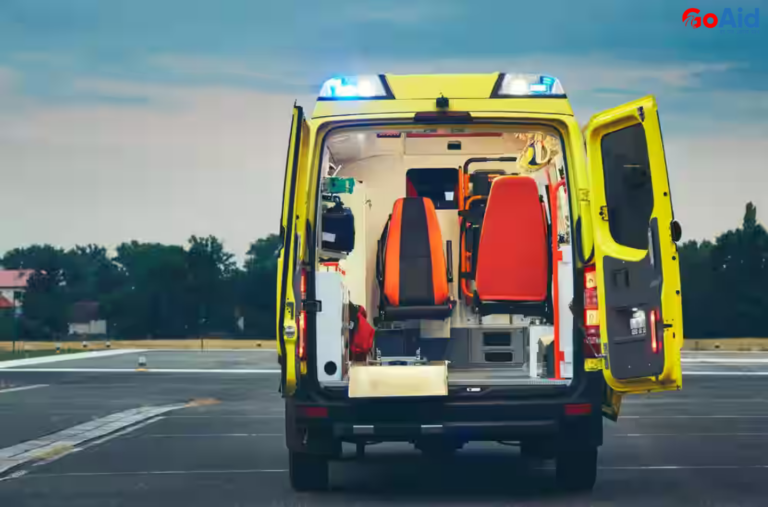
ICU ambulances replicate hospital-level intensive care on wheels. They are staffed with critical care specialists and fitted with advanced ventilators, infusion pumps, multi-parameter monitors, and high-flow oxygen. These ambulances are crucial for transporting patients with severe respiratory failure, especially when pollution triggers life-threatening complications.
4. Oxygen Ambulance
Oxygen ambulances provide continuous oxygen support for patients struggling due to pollution-induced breathlessness. They carry multiple oxygen cylinders, masks, and flow regulators. These ambulances are particularly useful for elderly people, asthma patients, or children whose oxygen saturation drops suddenly in hazardous AQI conditions.
5. Ventilator Ambulance
Ventilator ambulances support patients who cannot breathe adequately on their own. Equipped with invasive and non-invasive ventilators, these units maintain stable oxygen levels throughout the journey. They are vital for severe COPD flare-ups, respiratory collapse, or pediatric airway distress during Delhi’s winter smog.
How Do Oxygen and ICU Ambulance Services Help in Delhi’s Pollution?
During severe pollution waves, oxygen and ICU ambulances play a life-saving role by offering advanced respiratory and critical care support during transport.
1. Immediate Oxygen Stabilization
They provide instant oxygen support to patients struggling to breathe due to toxic smog.
2. Prevents Respiratory Collapse
Continuous oxygen flow prevents the patient’s condition from worsening during transit.
3. Ideal for Severe Asthma & COPD
These ambulances handle severe flare-ups triggered by high AQI levels.
4. Supports Critically Low SpO₂ Levels
Advanced monitoring ensures oxygen saturation remains stable throughout the journey.
5. Hospital-Level Care on Wheels
ICU ambulances carry ventilators, monitors, and trained professionals for critical cases.
6. Safe Transport for Pediatric & Senior Patients
Children and elderly individuals benefit from secure, closely monitored transfers.
7. Essential During High-Demand Pollution Days
They offer reliable support when hospitals are overwhelmed and emergency calls spike.
How Does Expert Paramedic Assistance Help During Smog Emergencies?
During Delhi’s smog season, expert paramedics play a crucial role in stabilizing patients, managing respiratory distress, and ensuring safe medical transport.
1. Accurate Assessment of Breathing Issues
Paramedics quickly evaluate oxygen levels, breathing patterns, and airway obstructions. Their timely assessment helps determine whether the patient needs oxygen support, nebulization, or ICU-level care. This ensures no time is wasted during smog emergencies.
2. Immediate Oxygen Administration
They provide instant oxygen support to patients struggling due to hazardous AQI. This rapid intervention helps stabilize breathlessness, prevents panic, and avoids further respiratory deterioration during transport.
3. Nebulization & Airway Management
Trained paramedics can administer bronchodilators, manage airway blockages, and ensure smooth breathing. This is especially vital for asthma patients, children, and elderly individuals affected by smog.
4. Monitoring Vital Signs Continuously
Paramedics continuously track SpO₂, pulse, BP, and respiratory rate to ensure the patient remains stable throughout the journey. This allows early intervention if the condition worsens.
5. Handling Critical Pollution-Triggered Emergencies
From COPD attacks to acute bronchitis flare-ups, paramedics are skilled in handling severe smog-induced health problems, reducing the chances of complications.
6. Reducing Panic for Families
Their professional guidance helps calm family members. This offers clarity on the patient’s condition and next steps—extremely important during smog-induced breathing emergencies.
7. Communication With Hospitals
Paramedics coordinate with the nearest hospitals to prepare emergency rooms in advance. This ensures that patients receive immediate care upon arrival.
How to Book GoAid Ambulances in Delhi for Pollution-Related Emergencies?
GoAid ensures fast and simple booking options for patients facing pollution-triggered breathing issues in Delhi.
1. Call Emergency Helpline (8008280020)
Dial the helpline to instantly connect with the GoAid support team and request an ambulance suitable for the patient’s condition.
2. Use the GoAid Mobile App
Through the app, you can choose the ambulance type, share your location, and confirm the booking within seconds.
3. Website Booking Option
Patients can submit a quick request through the GoAid website. This allows the team to dispatch an ambulance rapidly.
4. Share Exact Location & Patient Condition
Accurate details help the support team send the nearest and the most suitable ambulance. This ensures fast response during smog emergencies.
5. Receive Instant Confirmation & Live Tracking
Once booked, you receive real-time ambulance tracking, along with paramedic details. This ensures complete transparency and timely assistance.
What is the Nationwide Coverage of GoAid and Its Interstate Services?
GoAid has expanded its ambulance network across multiple cities in India. This ensures reliable emergency support beyond Delhi. Whether it’s pollution-related respiratory distress, medical transfers, or long-distance patient relocation, GoAid provides interstate ambulance services equipped with oxygen support, ICU facilities, and trained paramedics.
These ambulances are suitable for transferring patients from Delhi to neighboring states like Haryana, Uttar Pradesh, Rajasthan, and Punjab. The wide coverage ensures that even during severe pollution episodes or medical emergencies, patients get continuous care throughout the journey.
Interstate services also include bed-to-bed transfer, ventilator support, and long-route monitoring by certified medical staff.
What Are GoAid’s Affordable and Government-Approved Rates?
GoAid offers cost-effective ambulance services that comply with government-approved pricing guidelines. The charges depend entirely on the type of ambulance needed—such as BLS, ALS, Oxygen, ICU, or Ventilator ambulances.
Factors like distance, medical equipment, and emergency requirements also influence the final cost. Despite this, GoAid maintains transparent and fair pricing to ensure accessibility for all.
However, if you want to know the rates in detail, then click the link now to view the complete pricing list and ambulance categories.
Conclusion
In conclusion, we have provided you all the details about how GoAid Ambulance helps patients during severe pollution episodes in Delhi, along with information on emergency services, ambulance types, nationwide coverage, and the importance of expert paramedics.
With fast response times and advanced medical support, GoAid ensures timely and reliable care when pollution-related emergencies strike.
FAQs
Q1: How does GoAid help patients during severe pollution-related breathing problems?
A: GoAid provides oxygen-equipped ambulances, ICU support, and trained paramedics who stabilize patients experiencing smog-related respiratory distress. Their quick assessment, oxygen therapy, and rapid hospital transfer significantly reduce complications during high-pollution emergencies in Delhi.
Q2: How fast can GoAid ambulances reach during pollution emergencies?
A: GoAid’s 10-minute rapid response system ensures that ambulances reach patients as quickly as possible. With GPS tracking, strategically placed vehicles, and trained staff, it minimizes delays during smog-triggered medical situations.
Q3: What types of ambulances does GoAid offer for pollution emergencies in Delhi?
A: GoAid offers Oxygen Ambulances, ICU Ambulances, ACLS vehicles, BLS ambulances, and neonatal ambulances. These are fully equipped with essential life-support tools to manage breathlessness, asthma attacks, COPD flare-ups, and smog-related health crises.
Q4: When should someone call an ambulance during high AQI or smog conditions?
A: Call an ambulance immediately if a patient experiences severe breathlessness, chest tightness, dropping oxygen levels, unconsciousness, persistent wheezing, or unresponsive coughing—especially in children, seniors, and patients with asthma or heart conditions.
Q5: Are GoAid’s ambulance charges affordable during pollution season?
A: Yes. GoAid follows government-approved rates and offers transparent pricing. Charges vary depending on the ambulance type and medical equipment required, but the service remains accessible and cost-effective for pollution-related emergencies.