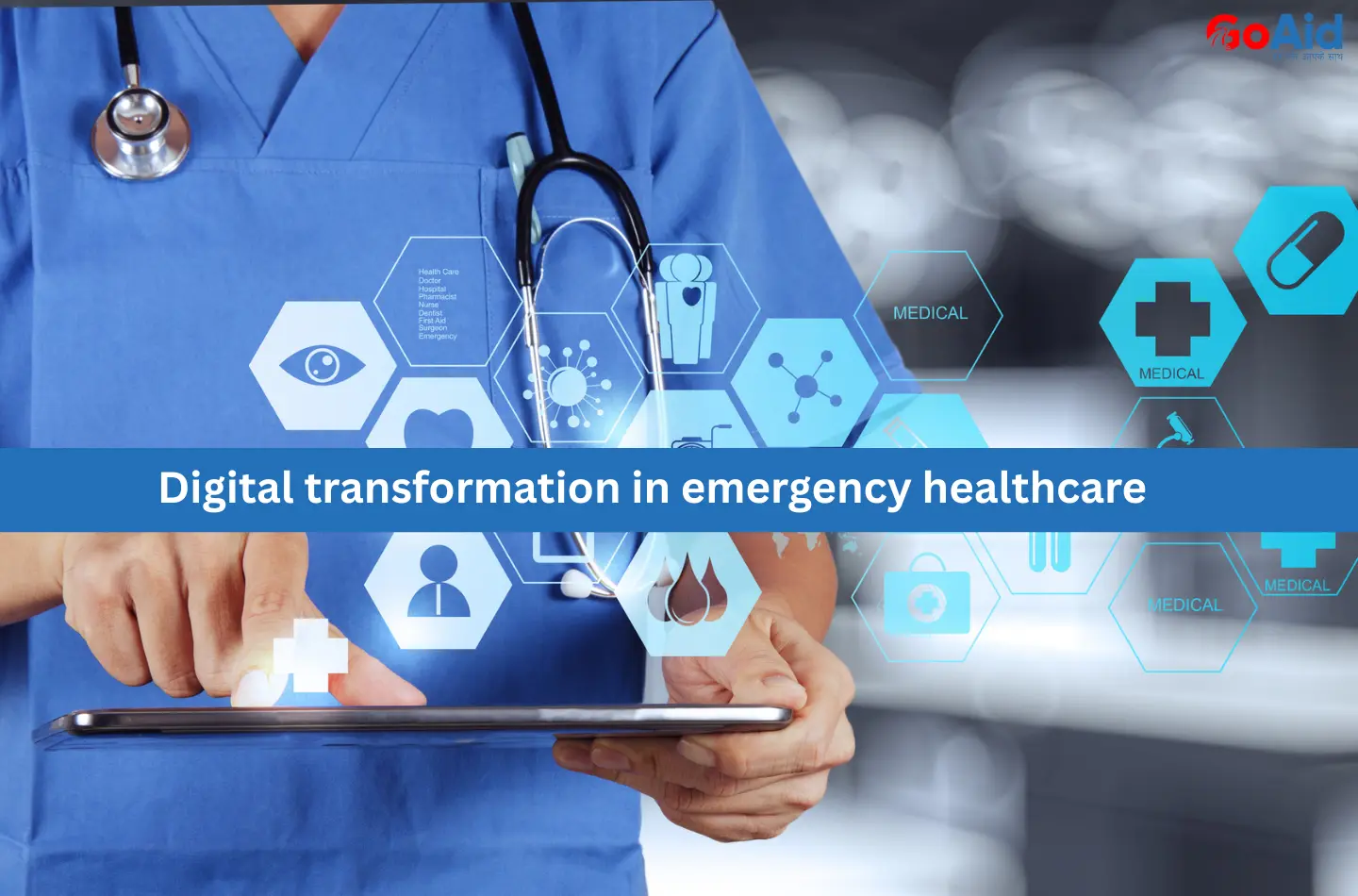

In today’s fast-moving world, medical emergencies demand quick decisions and even faster response. Traditional emergency healthcare systems often struggle with delays, miscommunication, and lack of coordination.
Digital platforms are changing this scenario by making emergency healthcare more accessible, faster, and more organized for patients and their families. Knowing how these platforms work helps people book ambulances instantly, track them in real time, and reach the right hospital without unnecessary stress or confusion.
This is why, in this blog, we have provided you all the information about how digital platforms are revolutionizing emergency healthcare. We have explained key aspects such as online ambulance booking through mobile apps, real-time tracking, digital coordination between hospitals and ambulances, transparent online payments, use of data and analytics, telemedicine support during transfers, and how services like GoAid are using technology to improve emergency response.
Do you want to know all this information in detail? Then read this blog to the end.
So, let’s start-
Role of Mobile Apps in Ambulance Booking
Digital healthcare platforms are transforming emergency care by enabling uninterrupted online ambulance booking. Mobile health apps like GoAid allow users to request ambulances instantly, track availability, and access specialized ambulance services. This enhances efficiency and reliability in emergency situations.
1. Instant Ambulance Requests
Mobile apps allow users to request an ambulance within minutes. This improves response times and reducing delays. GoAid Ambulance Service enables instant booking. This ensures patients receive timely emergency care through digital healthcare platforms.
2. Multiple Booking Options
Through mobile apps, users can book ambulances via app, website, or direct call. GoAid provides multiple booking channels. This makes emergency healthcare technology accessible to everyone, even in high-pressure situations.
3. Location-Based Dispatch
Digital platforms use GPS to dispatch the nearest ambulance. GoAid Ambulance Service ensures ambulances reach patients quickly, minimizing travel time and enhancing digital emergency response.
4. Specialized Ambulance Selection
Apps allow selection of ambulance types like BLS, ALS, ICU, or hospital transport. GoAid Ambulance Service offers diverse options, catering to all patient needs through mobile health apps.
5. Real-Time Availability Updates
Users can check ambulance availability in real time. GoAid’s app shows live updates of ambulance status, streamlining emergency healthcare technology for faster decision-making.
6. Integration with Telemedicine
Some digital platforms integrate telemedicine for pre-arrival patient assessment. GoAid Ambulance Service leverages such technology. This provides paramedics with critical information before reaching the patient.
7. User-Friendly Interfaces
Mobile health apps are designed for simplicity. GoAid’s app ensures users of all ages can easily request services, track ambulances, and access emergency care with minimal effort.
Real-Time Tracking and Faster Emergency Response
Real-time tracking is a game-changer in emergency healthcare technology. Digital platforms allow ambulances to be monitored via GPS. This ensures the fastest possible route is chosen and hospitals are prepared for incoming patients.
GoAid Ambulance Service utilizes this feature to optimize response times and patient outcomes. Through mobile health apps, families can track the ambulance’s location. This reduces anxiety and providing clear communication during emergencies.
Telemedicine integration allows paramedics to update hospitals in advance, facilitating immediate treatment upon arrival. Overall, digital emergency response systems, like GoAid, enhance efficiency, coordination, and reliability, transforming the way emergency healthcare is delivered across India.
Digital Coordination Between Hospitals and Ambulances
Digital platforms have revolutionized the coordination between hospitals and ambulances. This ensures uninterrupted communication and efficient emergency care. GoAid Ambulance Service leverages mobile health apps and digital healthcare platforms to provide real-time updates to hospitals, allowing medical teams to prepare for incoming patients.
This coordination minimizes delays, improves treatment accuracy, and increases the survival chances of critically ill patients. GPS tracking, telemedicine integration, and instant alerts enable paramedics to share vital patient information before arrival.
This reduces response time. Hospitals can prioritize resources, such as ICU beds or specialized equipment, based on incoming cases. By connecting emergency response teams, GoAid Ambulance Service ensures faster patient handoffs, optimal care, and enhanced trust in digital emergency response systems across India.
Online Payment and Transparent Pricing Systems
One of the biggest advantages of digital healthcare platforms is the inclusion of online payment options and transparent pricing systems. GoAid Ambulance Service allows users to pay via mobile apps, digital wallets, or online banking, eliminating the need for cash transactions during emergencies. This ensures a safer, more convenient, and faster process.
Transparent pricing is critical in emergency healthcare technology. GoAid Ambulance Service provides upfront costs for different ambulance types, such as BLS, ALS, ICU ventilator, or hospital transfer ambulances. Users know exactly what they are paying for, including government-approved rates, private ambulance charges, and any additional services like oxygen support or paramedic assistance.
Digital platforms also allow invoicing and receipts to be generated instantly. This provides a record for insurance claims or hospital billing. By integrating payment gateways with mobile health apps, GoAid ensures secure transactions and reduces errors or disputes.
Furthermore, online payment systems help hospitals and ambulance services streamline administrative tasks. This enables paramedics and staff to focus solely on patient care. In emergencies, this digital coordination saves valuable minutes while ensuring cost transparency.
By combining secure payments, clear pricing, and mobile app convenience, GoAid Ambulance Service exemplifies how digital healthcare platforms enhance user trust and make emergency healthcare technology accessible and efficient for every citizen.
Use of Data and Analytics in Emergency Healthcare
Data and analytics are transforming emergency healthcare by optimizing response, resource allocation, and patient outcomes. Platforms like GoAid Ambulance Service collect real-time data for actionable insights.
1. Response Time Optimization
Analytics track average response times. This helps GoAid Ambulance Service identify bottlenecks and deploy ambulances faster. This improves digital emergency response.
2. Resource Allocation
Data analysis ensures ICU, ALS, and ventilator ambulances are deployed strategically to high-demand areas. This improves overall emergency healthcare technology efficiency.
3. Predictive Demand Mapping
By analyzing historical requests, GoAid predicts peak emergency periods and locations. This enables proactive ambulance positioning via mobile health apps.
4. Patient Outcome Tracking
Digital healthcare platforms record patient vitals, treatment interventions, and recovery rates, allowing GoAid Ambulance Service to continuously enhance service quality.
5. Fleet Management
Analytics optimize ambulance utilization, maintenance schedules, and route planning. This ensures readiness and reliability of GoAid’s diverse fleet.
6. Performance Monitoring of Paramedics
Data tracks paramedic response efficiency, adherence to protocols, and patient handling, promoting excellence in digital emergency response.
7. Cost Optimization
Analyzing resource consumption and operational expenses helps GoAid Ambulance Service maintain affordable, government-approved rates while sustaining quality service.
8. Integration with Telemedicine
Real-time analytics support telemedicine decisions, allowing paramedics to consult doctors remotely. This improves patient care during transit.
9. Emergency Trend Analysis
Data identifies patterns in emergencies, such as accident-prone areas or seasonal illnesses. This enables better preparation and faster response.
10. User Experience Enhancement
Analytics on app usage, booking trends, and feedback help GoAid Ambulance Service improve mobile health apps and digital healthcare platforms for a uninterrupted user experience.
Telemedicine Support During Patient Transfer
Telemedicine integration in digital emergency response enhances patient care during ambulance transit. GoAid Ambulance Service leverages mobile health apps and digital healthcare platforms to provide real-time medical guidance, connecting paramedics with doctors and ensuring critical interventions before reaching hospitals.
1. Remote Doctor Consultation
Paramedics can consult doctors via telemedicine during transit. GoAid Ambulance Service enables real-time advice. This ensures timely interventions and improving patient outcomes in emergencies through digital healthcare platforms.
2. Continuous Vital Monitoring
Telemedicine allows doctors to monitor patient vitals remotely. GoAid ambulances equipped with ICU ventilators transmit data in real time. This enhances emergency healthcare technology during transfers.
3. Pre-Arrival Hospital Coordination
Doctors can inform hospitals about patient conditions in advance. GoAid’s digital emergency response system ensures hospitals are prepared for immediate treatment upon arrival.
4. Medication Guidance
Doctors guide paramedics on medication administration while en route. Mobile health apps support safe and accurate drug delivery. This improves patient care.
5. Emergency Procedure Support
Telemedicine provides step-by-step guidance for critical procedures. GoAid Ambulance Service empowers paramedics with expert support, even in complex emergencies.
6. Specialist Availability
Remote specialists can be consulted for cardiac, trauma, or neonatal emergencies. Digital healthcare platforms enable GoAid to extend expert care during patient transfers.
7. Real-Time Imaging and Reports
Digital tools allow transmission of scans or lab reports en route. GoAid uses this feature to assist doctors in making informed decisions before hospital arrival.
8. Family Communication Updates
Telemedicine integration allows paramedics to update patient families in real time via mobile health apps. This reduces anxiety and enhancing transparency.
9. Critical Care Prioritization
Doctors can prioritize interventions based on live data. GoAid Ambulance Service uses telemedicine to ensure that patients with life-threatening conditions receive immediate attention.
10. Training and Protocol Adherence
Telemedicine systems help paramedics follow standardized emergency healthcare protocols. GoAid Ambulance Service integrates this into mobile apps. This ensures consistent, high-quality care across all emergency transfers.
Improved Accessibility in Rural and Remote Areas
Digital healthcare platforms are bridging the gap between urban and rural emergency services. In remote areas, access to timely medical care has traditionally been limited, but GoAid Ambulance Service leverages mobile health apps and digital emergency response technology to improve accessibility.
With features like online ambulance booking, GPS-based dispatch, and real-time tracking, patients in distant locations can now summon ambulances quickly. This reduces critical delays.
Telemedicine integration allows doctors to guide paramedics remotely. This ensures quality care even when specialized hospitals are far away. GoAid Ambulance Service also provides free ambulance services for pregnant women in underserved regions, demonstrating commitment to national coverage.
By combining mobile health apps, digital coordination with hospitals, and GPS-enabled ambulance fleets, GoAid ensures that emergency healthcare technology reaches every corner of India. As a result, rural and remote populations now benefit from faster response times, enhanced treatment quality, and improved survival rates during critical emergencies.
Challenges and Limitations of Digital Healthcare Platforms
While digital healthcare platforms offer immense benefits, there are some challenges in implementation. Despite advances in mobile health apps and online ambulance booking, issues such as network limitations, data security, and user adoption can impact emergency healthcare technology effectiveness.
1. Internet Connectivity Issues
Remote areas often face poor network coverage. GoAid Ambulance Service may experience delays in online ambulance booking or real-time tracking due to connectivity limitations.
2. High Initial Costs
Setting up digital healthcare platforms involves investment in mobile apps, telemedicine systems, and GPS-enabled ambulances, which can be challenging for smaller providers.
3. Data Privacy Concerns
Collecting patient health data requires robust security measures. Digital emergency response systems must comply with privacy regulations to ensure safe usage.
4. User Literacy and Training
Patients and paramedics need basic digital literacy to use mobile health apps effectively. GoAid provides training, but adoption can be slow in some regions.
5. Technology Dependence
Overreliance on digital tools can be risky. System failures or app glitches may affect ambulance dispatch and emergency care delivery.
6. Integration with Hospitals
Not all hospitals are digitally connected. Coordination gaps can reduce the efficiency of emergency healthcare technology, affecting response times.
7. Maintenance and Upgrades
Digital platforms require regular updates and maintenance. GoAid Ambulance Service must ensure fleet management systems, apps, and telemedicine tools remain up-to-date.
8. Regulatory Challenges
Government approvals, compliance with healthcare regulations, and interstate coordination can pose obstacles in digital emergency response.
9. Limited Telemedicine Scope
While telemedicine enhances care during transit, certain procedures cannot be performed remotely, necessitating immediate hospital intervention.
10. Resistance to Change
Some patients and staff prefer traditional methods over digital healthcare platforms, creating a barrier to adoption and efficiency improvements in emergency healthcare technology.
How GoAid Leverages Digital Innovation?
GoAid Ambulance Service harnesses digital healthcare platforms and mobile health apps to streamline emergency response, enhance patient care, and improve operational efficiency, setting a benchmark in digital emergency healthcare technology across India.
1. Advanced Mobile Health Apps
GoAid’s mobile apps enable users to book ambulances instantly, track real-time locations, and access specialized services. These digital healthcare platforms ensure fast, reliable, and convenient emergency healthcare technology for all patients.
2. GPS-Enabled Fleet Management
Using GPS tracking, GoAid ambulances are dispatched efficiently. This reduces response time. Digital coordination ensures that patients receive timely emergency care. This enhances overall digital emergency response effectiveness.
3. Telemedicine Integration
GoAid incorporates telemedicine support during transit, allowing paramedics to consult doctors remotely. This digital innovation improves patient outcomes and ensures professional guidance in critical situations.
4. Real-Time Hospital Coordination
Digital platforms enable hospitals to receive patient information before arrival. GoAid Ambulance Service uses this feature to prepare emergency teams, allocate ICU beds, and deliver faster, more effective treatment.
5. Online Payment and Transparent Pricing
GoAid integrates secure online payments and clear pricing through mobile apps. Patients benefit from government-approved rates, cashless transactions, and a transparent digital emergency healthcare system.
6. Data Analytics for Improved Services
GoAid collects and analyzes emergency response data to optimize ambulance deployment, route planning, and paramedic performance. These insights enhance digital healthcare platforms and improve patient care.
7. Nationwide Coverage with Innovation
GoAid leverages digital tools to provide services across multiple cities and remote areas. Mobile health apps, online booking, and GPS tracking ensure accessible, efficient, and high-quality emergency healthcare technology nationwide.
Conclusion
In conclusion, we have provided you all the details about how digital platforms are revolutionizing emergency healthcare through services like GoAid Ambulance Service. From mobile health apps and online ambulance booking to real-time tracking, telemedicine integration, and nationwide coverage, GoAid leverages digital innovation to improve response times, patient care, and accessibility.
By combining advanced technology, experienced paramedics, and transparent systems, GoAid ensures efficient, reliable, and high-quality emergency healthcare across India. This makes life-saving services accessible even in rural and remote areas, and setting a benchmark in digital emergency response.
FAQs
Q1: How does GoAid Ambulance Service use mobile apps for booking?
Answer: GoAid Ambulance Service uses mobile health apps to enable instant online ambulance booking, track ambulance location in real time, and choose specialized services like ICU, BLS, or ventilator ambulances. This ensures faster and reliable emergency healthcare technology.
Q2: Can I track my ambulance in real time?
Answer: Yes! GoAid Ambulance Service provides GPS-based real-time tracking through its mobile apps and digital healthcare platforms, allowing patients and families to monitor ambulance location and estimated arrival. This improves digital emergency response efficiency.
Q3: Does GoAid offer telemedicine support during transit?
Answer: Absolutely. GoAid integrates telemedicine in ambulances, allowing paramedics to consult doctors remotely, receive critical guidance, and monitor patient vitals during transfers. This enhances emergency healthcare technology for better patient outcomes.
Q4: Are GoAid Ambulance Services available in rural areas?
Answer: Yes, GoAid leverages digital healthcare platforms and GPS-enabled ambulances to provide services in rural and remote areas. This ensures timely response, accessibility, and quality emergency care nationwide.
Q5: How are payments and pricing managed in GoAid Ambulance Service?
Answer: GoAid Ambulance Service provides online payment options and transparent, government-approved pricing. Mobile apps allow cashless transactions, cost transparency, and secure payment. This makes digital emergency healthcare technology convenient and reliable.